education, grammar, history, humor, language, philosophy, politics

Writing Well – Part 2

Typing just [Enter] key into the Search box makes it easy to browse WordPress blogs like this one.  Here, the [Menu] button (atop the vertical black bar) reveals widgets like the Search box.

Babies, Names, and Snobs

Here are links to all posts in this project of reviewing and supplementing the splendid book

The Lexicographer’s Dilemma by Jack Lynch.

  1. Introduction
    What does the rise of “proper” English have in common with a physics conundrum about gravity?
  2. Babies, Names, and Snobs
    We name words by wrapping them in square brackets to avoid overloading more common conventions.
  3. Descriptivism, Prescriptivism, and ????
    We add a new ISM to the familiar duo of attitudes toward English language usage: readabilism.
  4. Why is English Spelling Such a Mess?
    An insight into the difficulty of spelling reform has wide-ranging significance, far beyond spelling.
  5. Ambiguity Sucks!
    Ambiguity is almost always at least a little harmful to clear communication. It can be disastrous.
  6. What is the Point of Punctuation?
    Careful punctuation helps avoid unwanted ambiguity.
  7. Yogi Berra’s Paradox
    Sometimes bad English is good English that’s good because it’s bad.
  8. Blood & Gold End This Series
    Apart from a concern about the examples on 2 late pages in the book, I could applaud those pages until my hands bleed.

Sorry, but we need a short digression on ways to name a word so we can talk about it.  Some details here will also contribute later to the overall project.

Failure to distinguish using a word from talking about it can lead to confusion, as in the following dialog:

Mother :         What did you learn in school today?
Small Child :  Teacher showed us how to make babies.
Mother :         What?  WHAT?
Small Child :  Drop the Y and add IES.

In casual speech, we can insert “the word” in a few places.  That is clunky in extended writing.  There are 2 common ways to do the job in writing: quote marks and italics.  Using quote marks works well in short documents, but it can be confusing in longer ones that also use quote marks for actual quotations and/or for sarcasm, as in

After an ad blitz from the National Rifle Association rescued his failing campaign, Senator Schmaltz “bravely” defended the right of crazy people to buy assault weapons.

Maybe we should follow Lynch and use the convention popular among those who are most fastidious about the difference between using a word and discussing it: those who often call it the “use/mention distinction” and put words being mentioned (rather than used) in italics.  I do not mind doing w/o italics for emphasis because I prefer bold anyway, but italics are also used for titles and for foreign words temporarily imported into English.  I want those uses, and I found that Lynch’s use of italics for multiple purposes in quick succession invited confusion.

There is a simple way to give any word or phrase a name that works well here and in many other contexts, tho not universally.  Wrap it in square brackets (or curly braces).  Choose the wrapper U never (well, hardly ever) use for some other purpose in the current document and run with it.  If both wrappers are OK, use square brackets and give the Shift key a rest.

Now I can avoid confusion, even if I want to be emphatic, be sarcastic, and mention words (marking some as foreign), all in the same sentence:

Some snobs flaunt their “education” by saying [Weltanshauung] when [worldview] is all they need.

While not so disgusting as Senator Schmaltz, the flaunting snobs are enemies of clarity.  An enemy of my friend is my enemy too, and clarity is both a very dear friend and a concept crucial to amicable resolution of some of the tensions that Lynch explores so ably.  So I want to be especially clear and hope U will forgive the digression into metametalanguage.  Will put a quick reminder of the square brackets convention early in each subsequent post.  The next one will get down to business.


enlightenment, grammar, history, humor, language, politics, science

Writing Well – Part 1

Typing just [Enter] key into the Search box makes it easy to browse WordPress blogs like this one.   Here, the [Menu] button (atop the vertical black bar) reveals widgets like the Search box.

Introduction

Here are links to all posts in this project of reviewing and supplementing the splendid book

The Lexicographer’s Dilemma by Jack Lynch.

  1. Introduction
    What does the rise of “proper” English have in common with a physics conundrum about gravity?
  2. Babies, Names, and Snobs
    We name words by wrapping them in square brackets to avoid overloading more common conventions.
  3. Descriptivism, Prescriptivism, and ????
    We add a new ISM to the familiar duo of attitudes toward English language usage: readabilism.
  4. Why is English Spelling Such a Mess?
    An insight into the difficulty of spelling reform has wide-ranging significance, far beyond spelling.
  5. Ambiguity Sucks!
    Ambiguity is almost always at least a little harmful to clear communication. It can be disastrous.
  6. What is the Point of Punctuation?
    Careful punctuation helps avoid unwanted ambiguity.
  7. Yogi Berra’s Paradox
    Sometimes bad English is good English that’s good because it’s bad.
  8. Blood & Gold End This Series
    Apart from a concern about the examples on 2 late pages in the book, I could applaud those pages until my hands bleed.

lex-dilem_jack-lynch
Writing well ain’t easy.  If the word “ain’t” in the previous sentence raised hackles, U really need to read The Lexicographer’s Dilemma by Jack Lynch.  If not?  Read it anyway.  This post starts a series of posts that includes a glowing review of the book, with my own additions and amplifications for some points (and a few mild disagreements).

One of the few complaints I have about the book is that the title is too narrow.  Yes, the book considers lexicography.  It also considers grammar, punctuation, spelling, and vulgarisms.  In just 276 well-written pages (not counting source notes and such), it considers all these things with serious historical scholarship and considerable humor (mostly dry; sometimes LOL).

Why a series of posts?  Doing justice to the scope of the book in a single post would be tough unless what I wrote was only a book review, and the single post might still be quite long.  Better to write a separate post of moderate length on each of several themes in the book, adding something worthwhile to each.  In between posts in this Writing Well series, I can post on other topics.  If I think of yet another way that the sane and decent people in the USA might resist the Age of Trumpery, I want to interrupt the series rather than interrupt work on a single humongous draft.

Can a noncontiguous series work?  Across the Room and Into the Fire is working quite well for Óglach, with Part 6 (out of a projected 7) posted as of this writing.

Example 1.1: Recency of “Proper” English


Example numbers in this series have the form (part number).(number within the part), just in case I want to refer to an example in one part when writing up another part.

The following quote from page 10 of the book poses a conundrum that cries out for the kind of historical investigation exemplified by the book.

For just one third of 1 percent of the history of language in general, and for just 20 percent of the history of our own language, have we had to go to school to study the language we already speak.

When something is that strange, asking how the Hell it happened is not just idle curiosity.  It might lead to major insights.  Here is something similarly strange in physics.

For every chunk of matter in the entire universe (no matter what it is made of), the gravitational mass is exactly the same as the inertial mass.

For everything we can get our hands on, the equality of the 2 kinds of mass has been verified to more decimal places than I can count on my fingers.  Why is gravity like this?  Isaac Newton had no idea at all.  His theory of gravity could use this fact but could not explain it.  Early in the previous century, many physicists were uneasy about this apparent cosmic coincidence.  They were also uneasy about a piddling tiny difference between how Mercury orbited the sun and how Newton’s theory predicted it would orbit the sun.

One of the uneasy physicists was Albert Einstein, whose more elaborate theory of gravity gave an elegant explanation of the equality of the 2 kinds of mass and yielded predictions that were slightly different from Newton’s.  When Einstein published his theory in 1916, the only known differences were just barely measurable by those who cared about nerdy stuff like the perihelion of Mercury’s orbit.  Today, we know of many other differences.  Thanks to our knowledge of some of them, your GPS is more than just an expensive paperweight.

Acknowledgements


Jack Lynch wrote the book that anchors this series.  The historical perspective helped me refine my own views.  Want to see many examples of clear writing that is balanced and nuanced w/o being wishy-washy?  Read the book.

Óglach is among the bloggers who demonstrate that good writing can thrive in the blogosphere.   Thanking all those I know would take up too much space and omit those I do not know, but I must thank him for the inspiration to try a noncontiguous series.

Miriam Sargon taught the AP English class that I took in my senior year of high school.  (My post on lexicography will say a little more about that class.)  Back in the 1962/1963 academic year, well-informed people could still believe that Enlightenment values were winning (albeit slowly and with many setbacks).  She did not preach those values; she exemplified them.

haiku, history, seasons

Winter Waiting

However bleak and dark it may be, winter is unlike the bleak dark periods of history.  Winter’s onset and duration are roughly predictable.  Like the beavers in my haiku, those who prepare can often endure.
– Gray button (upper left corner) reveals widgets, –
– above post (on phone) or beside it (on desktop). –

A Google image search led to the images in this post; clicking on them will jump to the source credits at the end.  The haiku in this post is my response to

Carpe Diem Universal Jane #8 gathering clouds

with special thanks to one of Jane’s haiku about winter:

© Jane Reichold
|gathering clouds
|heavy and dark with holding
|unfallen flakes

beaver-outside-harlan_778x519

Quiet Endurance
|Cold. Pond iced over.
|Silent snow on tomb-like mound.
|Beavers wait it out.

beaver-inside_778x404

However bleak and dark it may be, winter is unlike the bleak dark periods of history.  Winter’s onset and duration are roughly predictable.  Like beavers, those who prepare can often endure.  Too bad history is not like that.

Sources

I wrote the haiku while commenting on a wintry post by Poet Rummager that I liked.  The post did not mention snow or beavers, but inspiration is quirky.  Tho I liked my haiku enough to post it all by itself, I decided to wait until I had found images that would clarify it for readers unfamiliar with the way beavers wait out winter in their lodges.  Those who would like to see more detail can find it on a very readable webpage that was created for course requirements at Hamilton College.

The photo of the outside of a lodge in winter is from a well-illustrated post by Harlan Schwartz on the Canadian Canoe Routes website.  The photo was shared on PhotoBucket and downloaded from there.

The drawing of the inside of a lodge in winter is from the book Why the Adirondacks Look the Way They Do by Mike Storey (Nature Knows Best Books, 2006).  The drawing was reproduced in a very positive online review by Paul Grondahl and downloaded from there.

history, politics

After 202+4 Years

In 1814,

the British Royal Navy bombards the fort guarding Baltimore’s harbor with state-of-the-art artillery.  The attack inspires a mediocre poem that is just barely singable (if U pretend that “yeh-et” is a word) to the tune of a British drinking song.  The Brits eventually get a consolation prize for the failure of the seige of Baltimore, when their song becomes our national anthem (but with lyrics from the poem, not the pubs).

On the morning of Election Day in 2016,

pink-rebel-386x342

I find that the Pink Rebel (a Xmas cactus that blooms when it damn well pleases, and never at Xmas) has a nice blossom.  I take that to be a good omen. Good omens have been in short supply recently, as the pseudoconservative coalition of bigots and plutocrats bombards a wobbly electoral process with state-of-the-art ratcrap, propelled by dark money and deep resentments.  The pseudoconservatives hope for veto-proof majorities in Congress as a consolation prize, if they cannot install a protofascist buffoon as President.

My local polling place is crowded.  The people who run it have finally found an efficient way to arrange all the stuff that must be crammed into a tiny room in the firehouse: a sign-in table, little booths for marking the ballots, and a machine to scan the ballots and keep them secure in case a recount is needed.  I have finally remembered to remove my ballot from the privacy sleeve before feeding it to the scanner.  (It is only in theory that the scanner can grab the ballot by an edge protruding from the sleeve.)  The scanner accepts the naked ballot w/o fuss.  Walking back to my car after an unexpectedly smooth and quick process, I tear up a little.

I have just now experienced an America that is calm and polite and competent.  For how long?

On the morning after Election Day in 2016,

sad-flag-386x527
I rise with the dawn’s early light and go online to see the results for races that were not foregone conclusions.  Mostly vomit-worthy, with a few consolations in the Senate.  The Dems will keep the NV seat that Reid is leaving.  The new Dem for IL is a combat veteran who knows the difference between patriotism and posturing; a seat for NH also flipped.  Maybe filibusters can keep the pseudoconservatives from passing the very worst things on their wishlist.

For at least the next 4 years, I expect that American politics will not be calm and polite and competent.  I hope I am wrong in this prediction, and not wrong merely because of surrender by those who oppose the pseudoconservative agenda.

Remember Mitch McConnell’s declaration (soon after the 2008 election) that preventing a 2nd term for Obama would have his top priority?  I was angered by that commitment to reflexive opposition (regardless of the cost to the nation) to whatever Obama might propose.  So I will try to keep an open mind.  It is conceivable that Trump will surprise everybody (even himself) by growing quickly and well into his awesome new responsibilities.  But not at all likely.

What is likely?  Zombie economics and accelerating climate change will lead to global suffering comparable to the Great Depression of the 1930-s.  Less likely (but still far from being alarmist hype) is the possibility of descent into thinly veiled fascism.

Yes, our traditions of liberal democracy are stronger than those of the Weimar Republic in 1932 and 1933.  The question is not whether our traditions are stronger than Weimar’s but whether they are still strong enough to withstand escalating bombardment from pseudoconservatives who have honed expertise at selective vote suppression.  The land of the free has its share of people with authoritarian personalities and deep resentments, often legitimate but exaggerated or misdirected.  As did Germany in the 1930-s.

The Royal Navy bombardment in 1814 was 202 years ago.  After the imminent 4 years of intensified pseudoconservative bombardment, will our flag be still there?

s-s-b-386x342.jpg
happy-flag-386x349
(reblog), history, humor, politics

Tough Lessons

The [Menu] button (atop the vertical black bar) reveals widgets like the Search box.  Typing just the [Enter] key into the Search box is a way to browse WordPress blogs.

Learning from history is tough, even for those who remember it.   Parallels are never exact.  The importance of each difference between then and now is a judgement call.   Consider a darkly hilarious cartoon by Jen Sorensen:

Mandatory Birthing Center

Yes, the resemblance of the armed guard to a Nazi storm trooper is as subtle as a sledge hammer.   Fine by me.   Maybe it will overcome the American propensity for historical amnesia and wishful thinking.

Much to my dismay, Hillary Clinton is the only Trump opponent who might conceivably be elected.   The progressive purists who disdain supporting Clinton are confident that something like what happened in Germany in 1932 and 1933 could not happen here and now, with a Trump victory.   Yes, our traditions of liberal democracy are stronger than those of the Weimar Republic.   The pertinent question is not whether our traditions are stronger but whether they are still strong enough, after years of relentless assault from the pseudoconservative coalition of bigots and plutocrats that controls staggering amounts of dark money and has already taken over the GOP.   Dammit, the answer is not obvious.

(reblog), history, politics

Loyalty

The failure of Congress to renew the Afghan Special Immigrant Visa program endangers people who served as translators for US troops in Afghanistan.   Enduring the same dangers and hardships as the troops, the translators sometimes fought alongside them.   Links to details will follow shortly.

This is not about whether the war in Afghanistan (or any war) was justified.   This is about doing right by good people who put their lives on the line but are being abandoned by lazy pols.

As a thoughtful video (under 3 minutes) produced by No One Left Behind points out, this is one of those extremely rare situations where it would be fairly easy to act both honorably and in our own self-interest, if only Congress would listen to a few combat veterans in its own ranks.

The rest of this post is excerpted from e-mail about the visa crisis that I received 2016-09-19 from No One Left Behind.   There are plenty of links to details in the excerpt.

˙ ˙ ˙

Congress left Washington, DC at the end of last week having failed to hold a vote on the Afghan Special Immigrant Visa program.   As a result of their unconscionable inaction, the State Department will run out of visas on 1 October 2016 (the start of the new fiscal year).   The current backlog of visas is roughly 10,000 applicants (when one includes family, we estimate the true number of applicants is 35,000+).  Thanks to Congress, our country will now break its promise to our Afghan translators and other wartime allies – who will continue to wait in limbo, in hiding, afraid that any moment might be the one where the Taliban or ISIS’s death squads finally find them.  How many will die before Congress does their job (votes to renew the program and authorize and issue more visas to the State Department) and honors our nation’s promise?

To help highlight the national security implications of this issue and the importance of protecting the honor of the American military, veterans, and credibility, we organized a Letter to Congress, which we delivered on 6 September 2016.   Hundreds of thousands of veterans, representing every branch of service in every American conflict dating back to World War II joined Medal of Honor recipients from Vietnam to the wars in Afghanistan and Iraq, former Chairmen and members of the Joint Chiefs, numerous wartime commanders, and other general and flag officers in adding their signatures to the letter.

˙ ˙ ˙ This past weekend, the [Wall Street] Journal joined the New York Times and the Washington Post in urging the Congress to renew and properly fund the program – the nation’s three leading newspapers are rarely this unified on matters of policy.

This is the 11th hour.  The State Department will run out of visas in 11 days.  Unless we build a movement and demand Congress renew the program immediately, it will likely die an unceremonious death, lost as an obscure program that got drowned out by the intense rhetoric of the 2016 election.

Help us prevent this tragedy by doing two things:

˙ ˙ ˙
© No One Left Behind
P.O. Box 3641, Merrifield, VA 22116
Tax ID: 47-125-1659http://nooneleft.org/  |  info@nooneleft.org

Update [2016-09-20]

If U have not already done so, please contact your Senators and Representatives.

I dislike phones and try to be much less scathing when communicating to pols rather than about them, so I used the e-mail links on my legislators’ web pages to send the following message.

General topic:  Immigration | National Security

Specific topic:  Afghan Special Immigrant Visas

Message text:

The failure of Congress to renew the Afghan Special Immigrant Visa program endangers people who served as translators for US troops in Afghanistan.   Enduring the same dangers and hardships as the troops, the translators sometimes fought alongside them.  This is one of those extremely rare situations where it would be fairly easy to act both honorably and in our own self-interest, if only Congress would listen to a few combat veterans in its own ranks and do right by good people who put their lives on the line but are being abandoned.

(BTW, the [Menu] button atop the vertical black bar reveals the widgets.)
haiku, history, humor, math, politics

Bhaskara for President!

Fooey.  He has hardly any name recognition, was not born a US citizen, and has been dead for centuries.  Being more reality-oriented than those who handed Donald Trump the job, I cannot seriously promote Bhaskara.  What a pity.  His elegant old proof helps me stay sane in the Age of Trumpery.
(BTW, the [Menu] button atop the vertical black bar reveals the widgets.)

Who’s Bhaskara?  We will get to that question shortly.  First, consider whatever gadget U are using to read this post.  It depends on many things, discovered over many years by many people who (unlike many pols) preferred building up to tearing down.  With many steps omitted (and “depends on” abbreviated to ), a few of those dependencies go like this:

Your Gadget quantum physics coordinate systems Pythagoras’ Theorem

Back in high school, Pythagoras’ Theorem may have seemed like a little fact about right triangles that may have been mildly interesting but did not deserve the effort of slogging thru the book’s tedious proof.  I could read the proof line by line, observe that it was valid, and be glad that I never needed to retrieve it for a test.  Hardly anybody could remember it for more than a few minutes.

Pythagoras’ Theorem turned out to be essential to blogging (and much else), so it would be nice to have a proof that mere mortals could remember, appreciate, and be inspired by.  Enter Bhaskara, 1114-1185.

Bhaskara replaced the usual picture (of 3 squares glued to the sides of 1 triangle) with a picture of 4 copies of the same triangle, arranged to form a big square with a little square inside it:

Pythagoras
(a+b
=
4 · ( ½ · a · b) + c²

The proof is sometimes displayed more tersely, with just the figure.  I prefer to write out a little algebra (while not belaboring why the angles do add up the way the figure suggests).  Tho he did not have modern notation, Bhaskara did have an elegant way to provide more detail for the mathematically fastidious.  He displayed another figure that also puts the 4 copies of the triangle inside a big square with sides a+b.  In the other figure, the area not covered by copies of the triangle amounts to a²+ b² because it consists of 2 small squares.  But the not-covered area amounts to c² in the figure displayed above, so we can conclude that

  a²+ b² = c²

w/o bothering with algebra and how to compute areas of right triangles.  We just need to bother with drawing both figures.  Wanna try your hand at drawing the other figure?  U can find the answer by following the link provided by Sieglinglungenlied in the comment section.

Googling reveals some variation in what is attributed to Bhaskara. The 1-figure proof I displayed appears in several places (sometimes attributed to Bhaskara and sometimes w/o attribution).  A similar 1-figure proof is commonly attributed to Bhaskara, with a big square of length c.  The 2-figure version that avoids algebra is attributed to Bhaskara in Math in 100 Key Breakthroughs, a nicely illustrated book by Richard Elwes.  Historical accuracy is not crucial at the moment, so I went with the best story w/o worrying about who got it right.

OK, I admit that having written a proof of mind-blowing elegance does not really qualify Bhaskara to be POTUS.  Too bad that many people think mind-blowing arrogance can hack it.

Clicking on the “politics” category or tag in this post will display all my uses of acidic humor to cope with the current state of US politics.  But acids are corrosive.  Sometimes, I forgo acid and contemplate some of the enduring (so far) glories of modern Western civilization, one of which is that it is not exclusively Western.  In particular, we got some elegant math from India and some elegant poetry forms from Japan.

One Way to Stay Sane in the Age of Trumpery
|Cherish all that is
|true and good and beautiful
|(like Bhaskara’s proof).


history, humor, oversimplify, politics

Who Wrote That?

The following 3 quotes all come from the same person.  Can U guess who? 

  1. The citizens … must effectively control the mighty commercial forces which they themselves have called into being.
  2. It is necessary that laws should be passed to prohibit the use of corporate funds directly or indirectly for political purposes; it is still more necessary that such laws should be thoroughly enforced.   Corporate expenditures for political purposes … have supplied one of the principal sources of corruption in our political affairs.
  3. Those who oppose all reform will do well to remember that ruin in its worst form is inevitable if our national life brings us nothing better than swollen fortunes for the few and the triumph in both politics and business of a sordid and selfish materialism.

The choices listed in the following poll have varying plausibility; they do include the actual author.   Please have a go before scrolling down to see the answer and why it matters.

Scroll down for the answer …

we-the-people-with-stars-stripes

The image of the US Constitution’s famous oversimplification “We the People” was downloaded and resized from http://mtviewmirror.com/wp-content/uploads/we-the-people-9.jpg.

All of the quotes are from a speech on The New Nationalism delivered 1910-08-31 by Theodore Roosevelt.  More than a century later, the work has still not been done.  More than a century later, pseudoconservatives still dump truckloads of ratcrap on anybody who opposes running the USA for the benefit of the biggest corporations and richest billionaires.

What to do in 2016?  Yes, I feel the pull toward a protest vote like writing in Bernie Sanders (or Theodore Roosevelt).  In what is not so obviously a mere gesture of protest, I could vote Green or Libertarian.  But I will not.  Unless U live in a cobalt blue or screaming red state, voting Green or Libertarian in 2016 is voting for Trump.  In the real world, all options suck.  Some suck worse than others.  Much worse.

Yes, one can hope that the combination of Trump in the White House with McConnell and Ryan dominating Congress will be so blatantly toxic that “the people” finally wake up, rise up, and wrest control from the plutocrats.  Alas, the 99% of us who are getting shafted includes bigots and nitwits.  It includes those who bought the Fox News claim to be fair and balanced.  It includes heavily armed crazies like Omar Mateen and Dylan Roof.

Popular uprisings do succeed now and then, as when the government of East Germany collapsed in 1989.  Hey, the good people on the wrong side of the Berlin Wall suffered only 44 years (*) of communist oppression before that.  More often, uprisings are either crushed (as in Hungary 1956) or seem successful for a while but descend into chaotic violence that spawns yet another tyranny (French Revolution; Russian Revolution; Arab Spring; …).

So I will trudge to the polls, hold my nose, and vote for Hillary.  I will also remember a more familiar quotation from TR, excerpted below with a few letters added in italics:

It is not the critic who counts; … The credit belongs to the woman who is actually in the arena, whose face is marred by dust and sweat and blood; … ; who errs and comes up short again and again, because there is no effort without error or shortcoming; but who does actually strive to do the deeds; …

While Hillary is deeply flawed, she is not one of those “timid souls who know neither victory nor defeat” detested by TR.  For that matter, neither is Trump.  He has other issues.  While TR was far from being a pacifist, he could see the downside of putting an impulsive jerk in a position to start a war.  That jerk also thinks appeasing the NRA is more important than making it harder for crazies like Adam Lanza to murder school children and their teachers.

(*) The physical wall stood for less than 44 years, but the whole point of erecting it was to stop desperate dashes thru the political wall erected in 1945.
(BTW, the [Menu] button atop the vertical black bar reveals the widgets.)
economics, history, humor, oversimplify, politics

Twelah of Stonina

No, the title is not the name of a character in a dreary fantasy epic.  It links 2 examples of something that can happen to oversimplifications as circumstances change: what is initially harmless (and perhaps mildly beneficial) can become pernicious.
(BTW, the [Menu] button atop the vertical black bar reveals the widgets.)

As in my earlier post arguing that oversimplification is unavoidable but can be done honestly, a whimsical example that is easily understood breaks trail for a serious example that is not.

1. Puzzles

Instructions for puzzles usually explain what the solution should look like, w/o constraining how to get there.  The Jumble series of puzzles has been around for decades, originally just on printed pages but now online also.  I sometimes solve the puzzle as printed in my daily newspaper.  (Yes, I am that old.)  Taken literally, the instructions for a Jumble do constrain the how, but in a way that strikes me as a harmless oversimplification in explaining the what.  More precisely, it was harmless until the series went online.

The weird words in the title of this post are scrambled versions of the ordinary words wealth and nations.  A typical Jumble puzzle invites the reader to unscramble several such scrambled words and then use the letters at some specified positions in the ordinary words to complete the caption of a cartoon.  Printed and online versions of the puzzle for 2016-06-10 are displayed below.  Both the layout and the use of “Now” in the printed instructions indicate that unscrambling comes before completing.  Similarly for the online instructions revealed by the [HELP] button.

2016-06-10_E23_Jumble

While I sometimes proceed in the instructions’ order, I more often guess the completion before unscrambling all (or even any) of the words.  So what?  I can put my pen anywhere on the page at any time.  The sequencing in the instructions is just a convenient way to explain what would be a solution to a Jumble puzzle.  One could rewrite and reformat the instructions so as to explain that w/o extraneous sequencing (as in the instructions for Sudoku), but it is not obvious how to write sequence-free instructions for Jumble that are as clear as the oversimplified instructions with extraneous sequencing.  Why bother?

Here’s why.  Look at the online version.  That bright green square is a place for typing, if U so choose.  The interface does a good job of allowing U to drag letters rather than type.  After unscrambling all the scrambled words, U will see the available letters appear above the caption and can type or drag to complete the caption, just as U typed or dragged when unscrambling.   While the interface displays several signs of  good software engineering, it takes the informal specs too literally and mandates the heuristic of unscrambling all the words before doing anything to complete the caption.   (Being a nerd myself, I can sympathize.)   What began as a harmless oversimplification became a killjoy.

As it happens, I started by guessing the caption for the 2016-06-10 Jumble, then verified that my unscramblings of 3 words were consistent with my guess, and then used the resulting tentative knowledge about letters to be contributed by the word still scrambled as a hint about how to unscramble it.  (A tiny example of how science works.)  No can do in the online version.  There is a [HINT] button that doles out a single letter in a single word.  My preference for making my own hint is not just a consequence of my being compulsively self-reliant.  My own hint is discovered and might be misleading because I might have guessed wrong at the start.  The online hint is an infallible gift from on high.  No fun in that.

If U want to work on the online version of this particular Jumble, U can click on its image to visit a page with today’s puzzle and then use the page’s calendar widget to go back to 2016-06-10.

Now it is time for the serious example, which starts in the same century as the scene depicted in this example, but on the other side of The Pond.

2. Free Markets

The other momentous document published in 1776 was Adam Smith’s The Wealth of Nations, with a then-harmless oversimplification that has become a now-pernicious dogma.

Smith’s readers were familiar with intrusive governments and quasigovernmental organizations like craft guilds.  Mercantilist governments restricted who could sell what to whom.  Guilds set the prices of what their members made.  That was normal, as was censorship, state-sponsored religion, and commercial privileges granted by royal whim.  Smith was aware that his readers might find his free-market ideas disturbingly anarchic, and he tried to reassure them with his famous fantasy about an invisible hand.  He succeeded too well.

Smith remarked that, while he advocated much less intrusive government than his readers considered normal, there were still important government functions needed to make his free markets work.  He mentioned some explicitly.  Unsurprisingly, he did not mention those that would not be on anybody’s radar for over a century.  Markets cannot work properly w/o transparency: potential buyers need to know what they would be getting and how much they would be paying.  Apart from providing a trustworthy money supply, there was no obvious need for laws and regulations to make markets transparent.  They seemed obviously transparent; nobody wearing a 3-cornered hat noticed that transparency was being assumed and might someday need to be enforced.

With the passage of time, Smith’s ideas took hold, the economies of his nation and ours grew richer and more complex, and economists eventually realized that markets cannot be perfectly transparent.  What happens when they are seriously opaque?  When getting pertinent info is costly?  When some of the info floating around is false?  When insiders have pertinent info that they act upon but keep to themselves?  Long technical answers won Nobel Prizes for Kenneth Arrow and Joseph Stiglitz.  The financial crisis of 2008-2009 and its precursors illustrate a somewhat oversimplified short answer that suffices for present purposes:

The shit hits the fan.

By the time the importance of transparency and the need for laws and regulations that enforce it had become common knowledge among thoughtful advocates of free markets, the invisible-hand fantasy had morphed into market fundamentalism.  That dogma is a godsend for anybody who wants to act like a psychopath but suffers from the inconvenience of having a conscience.  It is OK if I scramble to enrich myself and U scramble to enrich yourself, no matter how much we harm each other or anybody else.  If the stupid gummint stays away and just lets “The Market” work its magic, everything will come out as well as possible in the real world, where resources are scarce and buying anything precludes buying something else with the same money.

Like religious fundamentalism, market fundamentalism is rigid, simplistic, and oblivious to the suffering it causes.  The real world is indeed harsh.  It is also vastly more complex than fundamentalists concede, perhaps more complex than they can imagine.  Enforcing fairness and transparency w/o stifling useful innovation is not easy.  More generally, finding a good balance between public and private economic activity is not so easy as it seems to market fundamentalists (or to socialists, at the other extreme).

Much longer (but still readable) discussions of opacity and other market failures can be found in books like The Roaring Nineties by Joseph Stiglitz.  Perverse incentives lead to perverse behavior.  Is that really surprising?

enlightenment, flowers, history, humor, language, photography

Lion’s Tooth

I like the scattered violets that appeared in my lawn some years ago.  In the spring I let the grass get high before I mow, so that the violets will have a good chance to set seed.  The delay also gives the dandelions a good chance to set seed.  Fine.

DandelionViolets

Would the dandelion have a better rep if we had translated (rather than anglicized) the Old French name?  Not likely.  Every flower is the same bright yellow, so there is no variation for plant breeders to coax toward white or red and then offer “Snow Ball Lion’s Tooth” or “Fire Ball Lion’s Tooth” in seed catalogs.  Any klutz can grow dandelions, so they give gardeners no bragging rights.

Nowadays the French have a derogatory-sounding name for dandelions.  Were the royal gardeners frustrated by the plant’s defiance of the oppressive formality of the plantings at Versailles?  The Germans have kept the good old phrase “lion’s tooth” (in their own language, of course), as have the Italians and the Spanish.  If it ain’t broke, don’t fix it.

When many people see a dandelion, they see a weed.  I don’t.  I see Löwenzahn, the Wagnerian Heldenblume that thrusts green and gold into the grayest and grimmest of our cityscapes.  I see Dent de Lion, the Enlightenment philosophe whose call for liberty and rationality rides the wind.

DandelionSeeds_few

I do pull weeds; I do not pull dandelions.

Flower of the Day – July 20, 2018 – Dandelion

– Gray button (upper left corner) reveals widgets, –
– above post (on phone) or beside it (on desktop). –
haiku, history, humor, politics

Rhyming Haiku: Couplet and Triplet

I enjoy smuggling rhymes into blank verse but have not yet gotten all 3 lines of a haiku I really like to rhyme.  My response to Carpe Diem #932 silk tree is a pair of all-new haiku.  I do like the one with a couplet.  The one with a triplet (plus an internal rhyme in the title at no extra charge) is submitted in the spirit of Abraham Lincoln’s corny jokes during the American Civil War: I laugh so that I will not cry.

Sound of Sunlight
|Rushing waters bring
|joy to those who hear them sing
|and see them sparkle.

Silly Rhymes for Scary Times
|A rhyme in blank verse?
|President Trump would be worse.
|Vote Dem or you’ll curse.

US_flag_inverted

Image Source

A public domain image of the American flag has been turned upside down to reflect the current state of US politics.

(BTW, the [Menu] button atop the vertical black bar reveals the widgets.)
haiku, history, humor

Time for a Haiku about Time

Historians give us the next best thing to traveling backward in time, so as to look over the shoulders of our predecessors and see how they coped with their predicaments while planting seeds of ours.  Of course, we cannot really do that.
(BTW, the [Menu] button atop the vertical black bar reveals the widgets.)

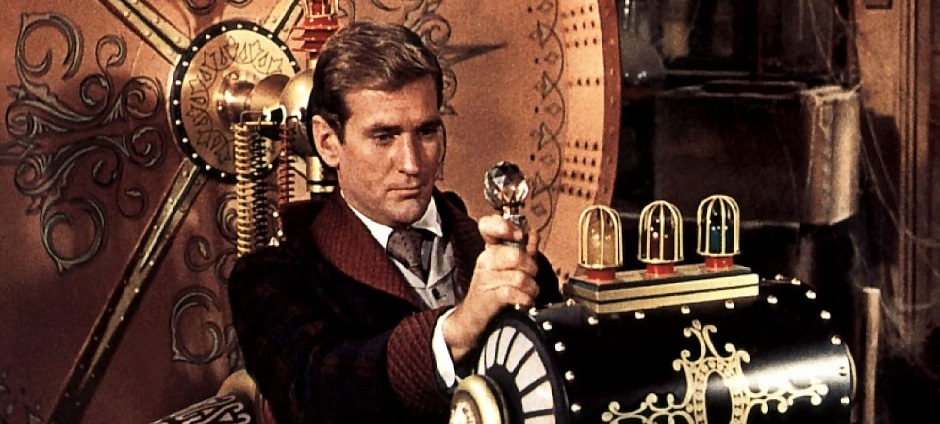
The protagonist in H.G. Wells’ novel The Time Machine travels fast forward in time, temporarily (!?) separating the passage of time in his own life from the passage of time in the world at large.  Of course, we cannot really do that either.

rod-taylor-time-machine_940x424

On the other hand …

Is Time Travel a Fantasy?
|No.  It just happens
|(whether we like it or not)
|on a fixed schedule.


The still from the 1960 film version of The Time Machine that appears here has been cropped to fit well on this page; it appears in an interesting post on TimidMonster.com.

haiku, history, humor, politics

Long After the Sixties

When will things slide …

from liberty to anarchy?

from growing to shrinking?

from bravery to bravado?

from firmness to fascism?

from hope to rage?

The answer, my friend, has blown in on the wind.

The answer has blown in on the wind.

Fiscal Responsibility
|Debts rise; incomes fall.
|Hard times demand bold action:
|tax cuts for the rich!
 

haiku, history

Motion in Haiku: 2 Surprises

The [Menu] button (atop the vertical black bar) reveals widgets like the Search box.  Typing just the [Enter] key into the Search box is a way to browse WordPress blogs.

Some fine haiku were among the few good things to come out of World War I.  My experiment with one of them provides a response to Carpe Diem Perpetuum Mobile #2 rainbows sparkle (or movement in haiku).  While refining my nuanced stance on the 5-7-5 Rule ( Helpful guideline? Yes! Firm requirement? No! ), I tried tweaking a few classic haiku that broke the rule.  Could something that was already good be improved by revisions to comply with 5-7-5?  In particular, I considered a World War I image by Maurice Betz.  Neither the French original nor the straightforward translation on page 50 of The Haiku Handbook (2013 edition) obeys 5-7-5.  This post ends by quoting the translated Betz haiku (which is utterly static) and my [5-7-5]-compliant version (which has both fast and slow motion).  I was surprised twice.Duck-Rabbit_illusion_439x242

  1. The history of the shell hole can be narrated succinctly within the confines of 5-7-5.
  2. I do not have a stable preference for either version.  Like someone viewing the classic ambiguous image that can be seen as a duck facing one way or as a rabbit facing the other, I flip-flop between the still photo by Betz and the movie by me.

© Maurice Betz
|A shell hole
|In its water
|Held the whole sky.

Redemptive Trickle
|A shell exploded!
|Water slowly filled the hole
|and held the whole sky.

Image Source

  • Jastrow, J. (1899). The mind’s eye. Popular Science Monthly, 54, 299-312.
  • The soft copy used here has been downloaded and cropped.


haiku, history, humor, photography, science

Moving the Earth

Sometimes the Earth moves, quite apart from the constant motion in orbit around the Sun.  No, I am not using hyperbole to describe a big, screaming orgasm.  I am considering an even rarer event.
(BTW, the [Menu] button atop the vertical black bar reveals the widgets.)

Sometimes a really big idea challenges and ultimately transforms deeply held beliefs about the fundamental nature of human life.  Centuries ago, the idea that the Earth does indeed move around the Sun was such an idea.  Oh shit, we may not be at the center of the universe!  Astronomical humble pie from Copernicus has been pretty well digested; some people still cannot swallow humble pie that was pulled from the oven in 1858.

Already know what happened in 1858?  Please don’t leave.  I will keep it brief, keep it light, and put my own eccentric spin on the story.  (Honestly now, when was the last time U saw the phrase “big, screaming orgasm” in the 2nd sentence of a note on the history of science?)  Sources are thanked at the end of this post.

Back in 1858, there were no search boxes.  No Google.  No Wikipedia.  No e-mail!  Anything called a “manuscript” really was a collection of sheets of paper on which letters and symbols had been written by hand.  Want to show it to somebody U cannot visit?  Put it in the mail and hope it eventually arrives intact.  Want to have a backup copy in case it gets lost or damaged?  Write it out all over again before mailing.  No scanners.  No soft copy.  Yuck.

I am old enough to have lived and worked in a hard copy world, albeit with gadgets like electric typewriters that made it less painful than in 1858.  Collaborating with somebody several time zones away was agony in my early days and impossible in 1858.  In some important ways, doing science in my early days was more like it was in 1858 than it is now.  So I can imagine how Charles Darwin felt when he read the mail on 1858-06-18.

Correctly anticipating that his concept of evolution by natural selection would ignite a firestorm of controversy when published, Darwin had spent some of his time over the previous 20 years thinking about possible objections or misunderstandings, devising ways to answer or avoid them, and organizing a mountain of evidence.  Already an A-list biologist, Darwin was in no hurry and wanted to dot more i-s and cross more t-s before the firestorm.  Naturally, he wanted to wait a while before publishing his big idea.

The letter and manuscript that Darwin received on 1858-06-18 came from Alfred Wallace, a younger colleague then roughing it somewhere in one of the places that would now be called Indonesia or Malaysia or New Guinea.  Wallace sought advice about how to publish a new idea: evolution by natural selection.  Tho Wallace did not have a mountain of evidence, his pile was plenty high enough to justify publication.

Wallace earned his living by collecting natural history specimens for sale and was being hassled for the amount of time he devoted to nerdy “theorizing” when he should be killing things.  Naturally, he wanted to publish his big idea soon.  Naturally, he sought the opinion of a senior colleague with whom he had already exchanged a few letters on smaller matters.  He did not know (and could not know for months) that he had independently come up with the same big idea that Darwin had been quietly refining and supporting for years.

How could the differing priorities of Darwin and Wallace be reconciled?  How could Darwin respond to Wallace in a way that was fair to both of them and feasible in 1858?  No e-mail.  No conference calls.  Darwin consulted a few friends.  More than a century before the exhortation to

Let it all hang out!

enjoyed a vogue, they decided to do exactly that.  Those who attended the meeting of the Linnean Society of London on 1858-07-01 were treated to an explanation of the unusual situation, a reading of a summary of Darwin’s work, and a reading of Wallace’s paper.  Wallace was still in the boondocks and did not even know that his work (presented for him in his absence by one of Darwin’s friends) was sharing the spotlight on equal terms with Darwin’s.

Wallace did eventually return to England, make further contributions to biology, and enjoy a long friendship with Darwin.  Yes, they disagreed on some points.  Yes, creationists took such disagreements at the frontiers as an excuse to claim that the whole enterprise was “just a theory” with no greater plausibility than an extremely literal reading of Genesis as translated from a translation of the original ancient Hebrew.  But the Earth had begun to move again.  Oh shit, we may not be descendants of a pair of idle nudists who took advice from a snake!

Archimedes in 1858
|Darwin and Wallace
|found a lever long enough
|and a place to stand.

Greater Bird of Paradise

Sources

      • The brief biography of Wallace by Andrew Berry in the September 2015 issue of Natural History is very readable and provides some details I had not known.  No access to that issue of the magazine?  Pasting a few phrases into search boxes will compensate nowadays.  I have zoomed in on June/July of 1858 to elaborate on collaboration technologies (then and now), Darwin’s fairness predicament,  and why I applaud the way he resolved it.

    • Tim Laman’s many bird of paradise photos are featured in the September 2015 issue of Natural History.  The photos that appear here have been cropped to fit well on this page.  The originals (and many other splendid photos) can be seen on Tim Laman’s website.  Prints can be bought.

  • The concluding zinger about Adam and Eve is believed to be original; it is inspired by the edgy absurdist humor in Eric Wong’s blog.