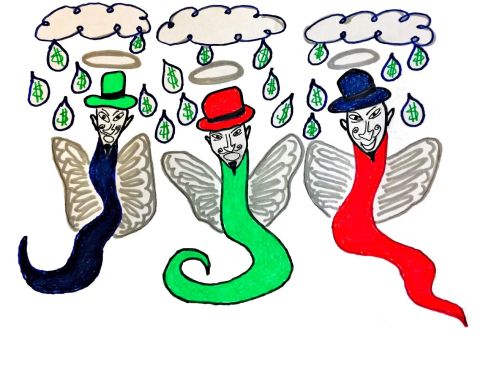
U will suck up to Putin and tweet vicious lies.
For some years of Hell they are all stuck with U.


In Yogi Berra’s Washington Post obituary, the subtitle “American philosopher” is well-chosen. While some of the quotes attributed (or misattributed) to Yogi Berra may just be funny malapropisms, some strike me as quirky ways to say something important, akin to Zen koans. One of his gems is widely applicable and especially relevant to a world on the brink of ecological and/or political collapse. It deserves a special name. It is also so widely quoted that 2 versions are common, as indicated below:
Yogi Berra’s Law
The game ain’t over til it’s over.
It ain’t over til it’s over.
Yes, the original context was baseball. With 2 outs in the bottom of the 9-th inning, the home team may be trailing. Yogi rightly admonishes both the home team (to resist despair) and the visitors (to resist complacency). A lot can still happen with 2 outs in the bottom of the 9-th inning. I prefer the shorter version of the law because it is more explicit about the law’s generality. “It” could be almost anyhthing.
My current context for heeding Yogi Berra’s Law is the imminent inauguration of Donald Trump as POTUS. At best, this event marks the start of 4 long and nasty years in the US. At worst, this event might combine with trends elsewhere (in China, Europe, and Russia) to start a new Dark Age. To consider the worst case is prudent, not alarmist.
Mindless repetition of platitudes like
is no substitute for the eternal vigilance that Jefferson said is the price of liberty. (There are other prices.) I resist the complacency of those platitudes; I also resist despair and continue (in my own small way) to be a citizen rather than just a complainer.
In a late inning in the biggest game of my lifetime, the Enlightenment is trailing. That sucks. But 2+3 is still 5 and Yogi Berra’s Law is still true.
From
Five Haiku Poems: Balance | Poet Rummager:
Image by Jiang Daohua | Dreamstime.com

Nobody who is
always gloomy can stay sane.
Set your laughter free.
Allow happiness
to handspring into your grin –
spreading joy within.
Nobody who is
always happy can be sane.
Let your tears flow, too.
Allow the sadness
to somersault down your face.
Tumbling tears you’ll taste.
Staying on the beam
is a challenge, unless you’re
a world class gymnast.
Haiku poetry by Mellow Curmudgeon and Poet Rummager
I cannot draw my way out of a paper bag, but Poet Rummager can draw. She is also a fine creative writer (with an impish and sometimes dark sense of humor) and a fun collaborator.
Originally posted on Slasher Monster:


The climax of this great series raises the Xmas Cat Pix tradition to new heights of hilarity.
A Google image search led to the images in this post; clicking on them will jump to the source credits at the end. The haiku in this post is my response to
Carpe Diem Universal Jane #8 gathering clouds
with special thanks to one of Jane’s haiku about winter:
© Jane Reichold
gathering clouds
heavy and dark with holding
unfallen flakes
Quiet Endurance
Cold. Pond iced over.
Silent snow on tomb-like mound.
Beavers wait it out.
However bleak and dark it may be, winter is unlike the bleak dark periods of history. Winter’s onset and duration are roughly predictable. Like beavers, those who prepare can often endure. Too bad history is not like that.
I wrote the haiku while commenting on a wintry post by Poet Rummager that I liked. The post did not mention snow or beavers, but inspiration is quirky. Tho I liked my haiku enough to post it all by itself, I decided to wait until I had found images that would clarify it for readers unfamiliar with the way beavers wait out winter in their lodges. Those who would like to see more detail can find it on a very readable webpage that was created for course requirements at Hamilton College.
The photo of the outside of a lodge in winter is from a well-illustrated post by Harlan Schwartz on the Canadian Canoe Routes website. The photo was shared on PhotoBucket and downloaded from there.
The drawing of the inside of a lodge in winter is from the book Why the Adirondacks Look the Way They Do by Mike Storey (Nature Knows Best Books, 2006). The drawing was reproduced in a very positive online review by Paul Grondahl and downloaded from there.
In music, any mishmash with a beat or a scale has an at least slightly repetitive structure. The sounds emanating from a beer garden or a rap concert are extremely repetitive. The good stuff is in between. While the musical lines in a piece by Glass have subtle variations, they are often too simple and repetitive to be interesting by themselves. Happily, they are not by themselves. Something special emerges when they are superimposed.
Descriptive short phrases can become oversimplified facades that obscure realities too complex to be described well (not just named) by the phrases. Neither Glass nor I can think of a good short descriptive phrase for his style, but I can offer a decent visual analogy that can be expressed concisely in a haiku. I should be doing my chores rather than responding to
But how could I resist a chance to put a link inside a haiku and pun on both the composer’s name and the title of one of my favorites among the works by him that I have heard?

Seeing while Listening
Transparent layers,
etched to form Moiré patterns:
See the sounds of Glass.

From Suite 3 by JSB
Bubbles in Bach’s Air:
I cannot grab them, so I
sing with silent joy.
Carpe Diem Haiku Family — A New “Shadow” Challenge

Image cropped from © Ryanfaas | Dreamstime.com
Lost Lunch?
Sunlight breaks thru clouds
and sends hawk’s shadow downward.
Prey darts for cover.
The past is never dead. It’s not even past.
A somber interpretation of this quote comes naturally.
And so on.
Like many classics, the Faulkner quote can be reinterpreted later, w/o superceding the original intent. As a quick example of such reinterpretation, consider JS Bach’s Two-Part Invention #11. It is very quick indeed (about a minute long) and was originally written for solo harpsichord. Click here to hear it arranged for banjo and marimba, on one track from a Grammy-winning CD, where banjo virtuoso Béla Fleck and friends reinterpret 19 short classical pieces. We will return to music shortly.
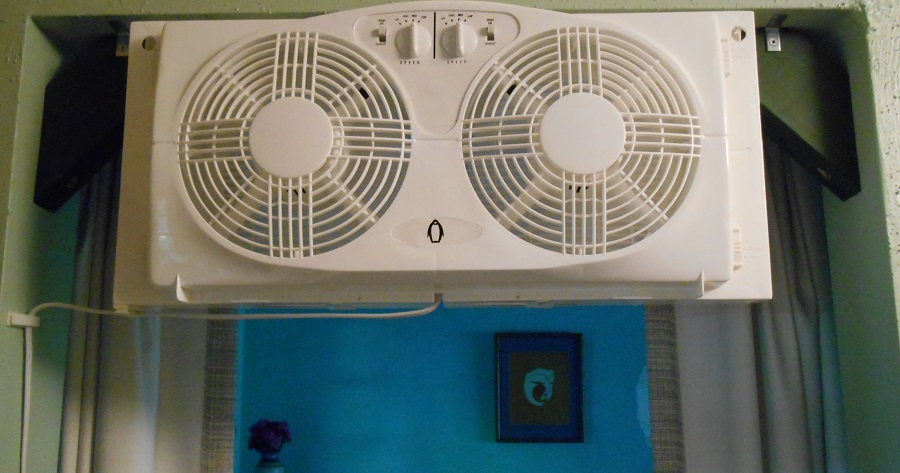
The story of my upbeat reinterpretation starts a few years ago. Tired of having the air in my kitchen be warmer and wetter than elsewhere in the house, I bought a window fan: 2 small quiet fans in 1 housing, meant to be squeezed between sash and sill for blowing air in or out of a window. I mounted the fan in a doorless doorway, so as to blow air from the dining room into the kitchen. It does help. A tall person would need to stoop when passing thru; I do not.

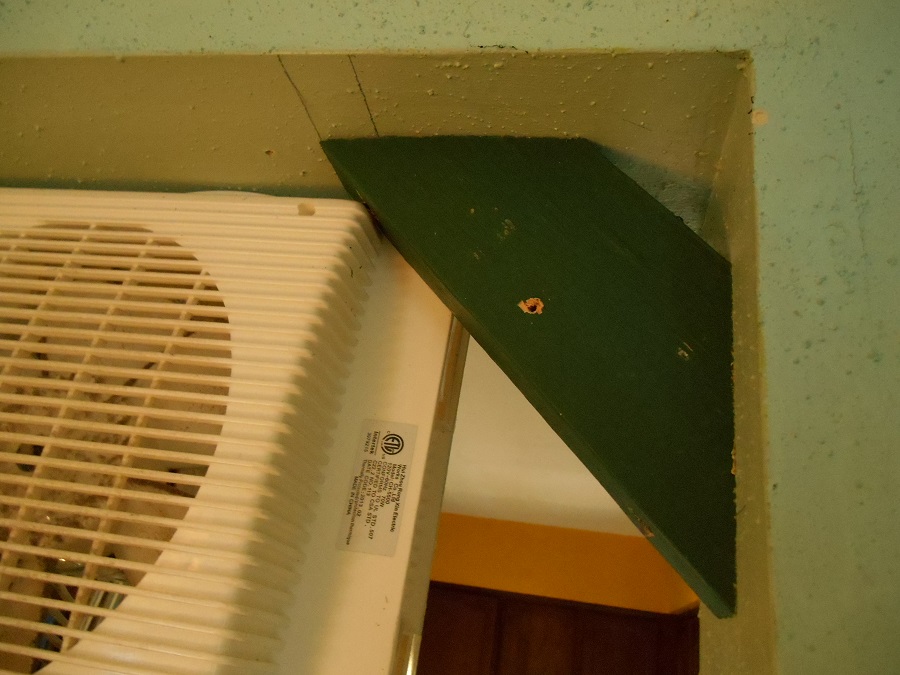
To mount the fan, I drilled holes in the fan housing and drove screws thru the housing into wooden supports (cut from scrap lumber) that I attached to the upper corners of the doorway. I chuckled at the thought that relating horizontal and vertical lengths (along the doorway) to diagonal lengths (of cut lumber) was yet another small consulting gig for Pythagoras.

Hmmm. I did not think of Pythagoras as an ancient dead Greek. I thought of him as an eminent older colleague (long since retired) who is doing quite well for his age and still has consulting gigs. The past is not past.
Will our civilization endure until I am as old as Pythagoras is now? (Not w/o some major course corrections.) Suppose it does. I doubt that I will have many more consulting gigs. But Pythagoras will. Bach’s music will still be cherished and reinterpreted, along with that of other great composers, from Hildegard to Hovhaness and beyond. Sometimes it is good that the past is not past.
Hildegard of Bingen, 1098-1179
Mystic visions or
migraine headaches? Whatever.
Her music lives on!
the British Royal Navy bombards the fort guarding Baltimore’s harbor with state-of-the-art artillery. The attack inspires a mediocre poem that is just barely singable (if U pretend that “yeh-et” is a word) to the tune of a British drinking song. The Brits eventually get a consolation prize for the failure of the seige of Baltimore, when their song becomes our national anthem (but with lyrics from the poem, not the pubs).

I find that the Pink Rebel (a Xmas cactus that blooms when it damn well pleases, and never at Xmas) has a nice blossom. I take that to be a good omen. Good omens have been in short supply recently, as the pseudoconservative coalition of bigots and plutocrats bombards a wobbly electoral process with state-of-the-art ratcrap, propelled by dark money and deep resentments. The pseudoconservatives hope for veto-proof majorities in Congress as a consolation prize, if they cannot install a protofascist buffoon as President.
My local polling place is crowded. The people who run it have finally found an efficient way to arrange all the stuff that must be crammed into a tiny room in the firehouse: a sign-in table, little booths for marking the ballots, and a machine to scan the ballots and keep them secure in case a recount is needed. I have finally remembered to remove my ballot from the privacy sleeve before feeding it to the scanner. (It is only in theory that the scanner can grab the ballot by an edge protruding from the sleeve.) The scanner accepts the naked ballot w/o fuss. Walking back to my car after an unexpectedly smooth and quick process, I tear up a little.
I have just now experienced an America that is calm and polite and competent. For how long?

I rise with the dawn’s early light and go online to see the results for races that were not foregone conclusions. Mostly vomit-worthy, with a few consolations in the Senate. The Dems will keep the NV seat that Reid is leaving. The new Dem for IL is a combat veteran who knows the difference between patriotism and posturing; a seat for NH also flipped. Maybe filibusters can keep the pseudoconservatives from passing the very worst things on their wishlist.
For at least the next 4 years, I expect that American politics will not be calm and polite and competent. I hope I am wrong in this prediction, and not wrong merely because of surrender by those who oppose the pseudoconservative agenda.
Remember Mitch McConnell’s declaration (soon after the 2008 election) that preventing a 2nd term for Obama would have his top priority? I was angered by that commitment to reflexive opposition (regardless of the cost to the nation) to whatever Obama might propose. So I will try to keep an open mind. It is conceivable that Trump will surprise everybody (even himself) by growing quickly and well into his awesome new responsibilities. But not at all likely.
What is likely? Zombie economics and accelerating climate change will lead to global suffering comparable to the Great Depression of the 1930-s. Less likely (but still far from being alarmist hype) is the possibility of descent into thinly veiled fascism.
Yes, our traditions of liberal democracy are stronger than those of the Weimar Republic in 1932 and 1933. The question is not whether our traditions are stronger than Weimar’s but whether they are still strong enough to withstand escalating bombardment from pseudoconservatives who have honed expertise at selective vote suppression. The land of the free has its share of people with authoritarian personalities and deep resentments, often legitimate but exaggerated or misdirected. As did Germany in the 1930-s.
The Royal Navy bombardment in 1814 was 202 years ago. After the imminent 4 years of intensified pseudoconservative bombardment, will our flag be still there?


Rightly disgusted with the choices offered by the major parties in the 2016 POTUS election, many voters abstained or voted third party. Being sympathetic to both Green and Libertarian concerns (and angry that those concerns got so little attention in the inane debates), I agree that there is something to be said for voting third party in the uncontested states that are safely blue or red. A minor party that crosses the 5% threshold in the popular vote will get ballot access and more attention in the next election.
What about the contested states?
Like it or not, Hillary Clinton and Donald Trump were the only candidates who could have become the next President. Like it or not, abstentions and 3rd party votes in contested states could have tipped them from Clinton to Trump. Like it or not, tipping contested states could have tipped the Electoral College from Clinton to Trump (or even thrown the decision into the House of Representatives, which would have chosen Trump).
So what? Should I not vote my conscience, regardless of where I live? No!
The point of voting is not self expression. The point is to participate in choosing the driver of a bus we all must ride in. The 2016 POTUS election was a choice between 2 bad drivers. One of them had a record that includes moving violations and at-fault collisions, but not DWI or total losses. The other was (and still is) an intoxicated newbie seething with road rage.
Image cropped from the Seattle Times
Among the many posts on many blogs that deal with this election, U can read more with independent and unusual angles in Keith’s blog as well as here.
2016 in the Hudson Valley
Wind and rain impaired
October’s color pageant.
Still the year’s best month.
If lumping fairness with (liberty; rationality; tolerance) sounds odd, please note that fairness to me is subtler than crude egalitarianism. Credit where credit is due. Ability rather than ancestry as qualification for high office. Opportunity for upward mobility. Respect for differing priorities. Willingness to forego getting all I want so that everybody has a shot at getting all they need, w/o trying to impose the same wants/needs categories on everybody.
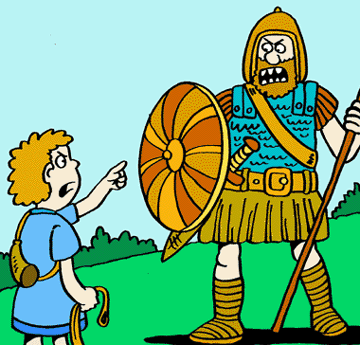
Downloaded from Clipart Kid, the image of David and Goliath trash talking illustrates a subtlety of fairness. It may look unfair that Goliath is the only one with armor and heavy weapons. Should David have them too? No, he would still be a scrawny youth, just encumbered by all that stuff. Let David have what suits David’s (not Goliath’s) skills and will not interfere with Plan B:
If my shots miss, run like Hell!
Deciding what is fair and then doing it can be a lot of work, as the endless stream of affirmative action lawsuits illustrates. Dunno how that story will end. I do know a true story about the difficulties of being fair in the real world that has a happy ending. I blogged about it in 2015, before I had a responsive theme. My post would have been unintelligible to anybody surfing on a phone or tablet (Harrumph!) rather than a real computer. Now that I have a responsive theme and a renewed urge to defend Enlightenment values (thanks to the current dismal state of US politics), I have revised that post in many small ways, partly to make it more explicit about fairness. The WordPress previewer assures me that it is indeed intelligible on all 3 platforms. Here is the link:
Typing just [Enter] key into the Search box makes it easy to browse WordPress blogs like this one. Here, the [Menu] button (atop the vertical black bar) reveals widgets like the Search box.The post reblogged here is a welcome reminder that there are still some thoughtful and pragmatic people in the US. Tho seriously flawed in many ways, the ACA is an improvement over what came before. The flaws can be fixed if the pols will stop posturing for a while.
Dear Mark T. Bertolini, Chairman and CEO, Aetna,
As a former actuary, benefits consultant, benefits manager, and a business and personal client of Aetna, I recognize fully the complexity of healthcare delivery and insurance in the US. I understand the meaning of claims loss ratios and the need for Aetna to earn a profit for its shareholders.
With this context, I ask that you please reconsider pulling Aetna out of the Healthcare exchanges in North Carolina and other states. I became an Aetna customer again when Aetna purchased the business of Coventry and integrated the two companies into the Aetna network. On the whole, our service has been good and we appreciate your negotiated discounts with Carolinas Medical Center and its doctor network. Many insureds do not realize the value of these discounts that must be paid by uninsureds.
The Affordable Care Act is still in its early childhood, but…
View original post 271 more words