birds, haiku, humor

Warned by a Shadow

From some viewpoints, a shadow has a bright side. An example is my response to a CDHK challenge to use the word [shadow] in a haiku.

Carpe Diem Haiku Family — A New “Shadow” Challenge

hawk-shadow_800x356

Image cropped from © Ryanfaas | Dreamstime.com

Lost Lunch?
|Sunlight breaks thru clouds
|and sends hawk’s shadow downward.
|Prey darts for cover.

(BTW, the [Menu] button atop the vertical black bar reveals the widgets.)
haiku, humor, math, music, quote, riff

Riff on a Faulkner Quote

The story of my upbeat reinterpretation of a Faulkner quote starts in my kitchen.

The past is never dead.  It’s not even past.

A somber interpretation of this quote comes naturally.

  • The foul stain on America from slavery persists.
  • A mysterious burden is passed down from each generation to the next (as in a post on Na trioblóidí that I found to be simultaneously intriguing, funny, and disturbing).
  • Original Sin.

And so on.

Like many classics, the Faulkner quote can be reinterpreted later, w/o superceding the original intent.  As a quick example of such reinterpretation, consider JS Bach’s Two-Part Invention #11.  It is very quick indeed (about a minute long) and was originally written for solo harpsichord.  Click here to hear it arranged for banjo and marimba, on one track from a Grammy-winning CD, where banjo virtuoso Béla Fleck and friends reinterpret 19 short classical pieces.  We will return to music shortly.

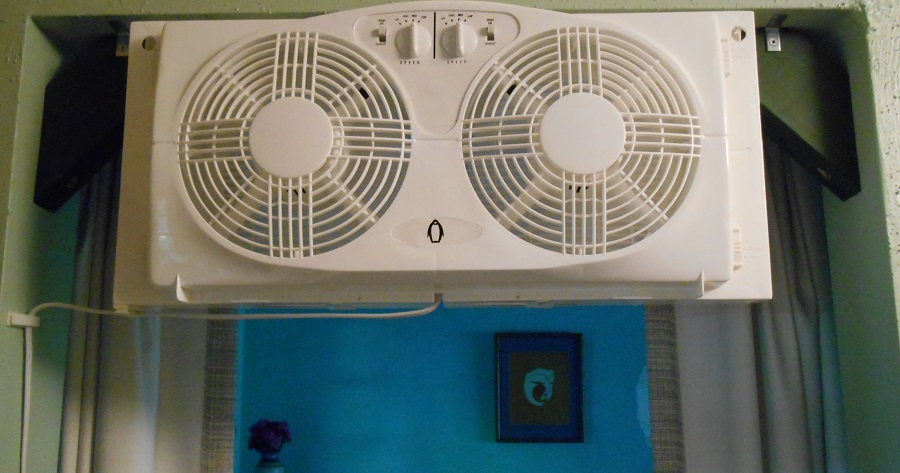
The story of my upbeat reinterpretation starts a few years ago.  Tired of having the air in my kitchen be warmer and wetter than elsewhere in the house, I bought a window fan: 2 small quiet fans in 1 housing, meant to be squeezed between sash and sill for blowing air in or out of a window.  I mounted the fan in a doorless doorway, so as to blow air from the dining room into the kitchen.  It does help.  A tall person would need to stoop when passing thru; I do not.

kitchenfan_900x473

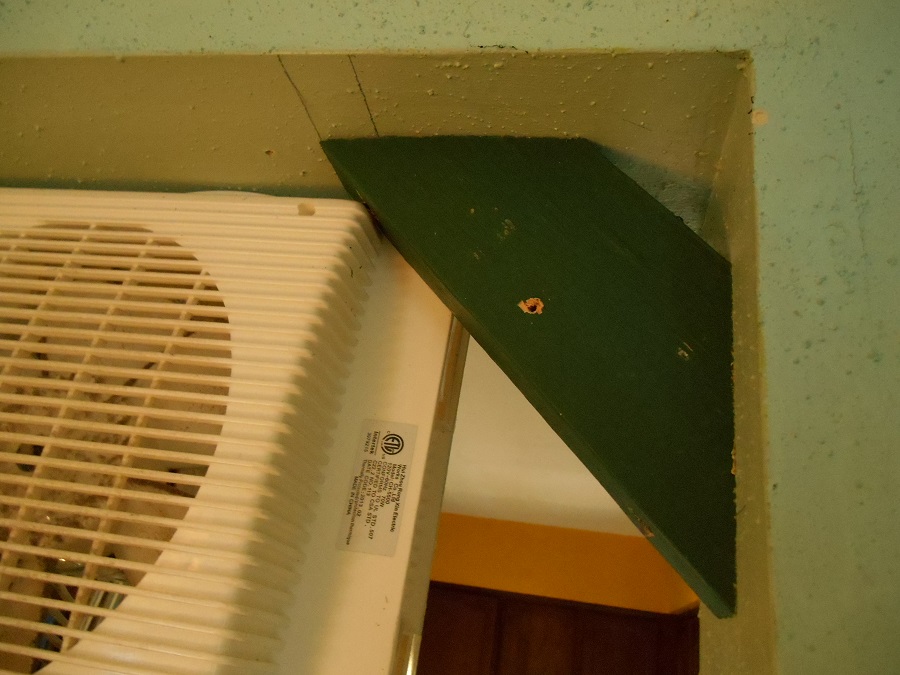
To mount the fan, I drilled holes in the fan housing and drove screws thru the housing into wooden supports (cut from scrap lumber) that I attached to the upper corners of the doorway.  I chuckled at the thought that relating horizontal and vertical lengths (along the doorway) to diagonal lengths (of cut lumber) was yet another small consulting gig for Pythagoras.

kitchenfanmount_900x675

Hmmm.  I did not think of Pythagoras as an ancient dead Greek.  I thought of him as an eminent older colleague (long since retired) who is doing quite well for his age and still has consulting gigs.  The past is not past.

Will our civilization endure until I am as old as Pythagoras is now?  (Not w/o some major course corrections.)  Suppose it does.  I doubt that I will have many more consulting gigs.  But Pythagoras will.  Bach’s music will still be cherished and reinterpreted, along with that of other great composers, from Hildegard to Hovhaness and beyond.  Sometimes it is good that the past is not past.

Hildegard of Bingen, 1098-1179
|Mystic visions or
|migraine headaches? Whatever.
|Her music lives on!

(BTW, the [Menu] button atop the vertical black bar reveals the widgets.)
haiku, history, humor, math, politics

Bhaskara for President!

Fooey.  He has hardly any name recognition, was not born a US citizen, and has been dead for centuries.  Being more reality-oriented than those who handed Donald Trump the job, I cannot seriously promote Bhaskara.  What a pity.  His elegant old proof helps me stay sane in the Age of Trumpery.
(BTW, the [Menu] button atop the vertical black bar reveals the widgets.)

Who’s Bhaskara?  We will get to that question shortly.  First, consider whatever gadget U are using to read this post.  It depends on many things, discovered over many years by many people who (unlike many pols) preferred building up to tearing down.  With many steps omitted (and “depends on” abbreviated to ), a few of those dependencies go like this:

Your Gadget quantum physics coordinate systems Pythagoras’ Theorem

Back in high school, Pythagoras’ Theorem may have seemed like a little fact about right triangles that may have been mildly interesting but did not deserve the effort of slogging thru the book’s tedious proof.  I could read the proof line by line, observe that it was valid, and be glad that I never needed to retrieve it for a test.  Hardly anybody could remember it for more than a few minutes.

Pythagoras’ Theorem turned out to be essential to blogging (and much else), so it would be nice to have a proof that mere mortals could remember, appreciate, and be inspired by.  Enter Bhaskara, 1114-1185.

Bhaskara replaced the usual picture (of 3 squares glued to the sides of 1 triangle) with a picture of 4 copies of the same triangle, arranged to form a big square with a little square inside it:

Pythagoras
(a+b
=
4 · ( ½ · a · b) + c²

The proof is sometimes displayed more tersely, with just the figure.  I prefer to write out a little algebra (while not belaboring why the angles do add up the way the figure suggests).  Tho he did not have modern notation, Bhaskara did have an elegant way to provide more detail for the mathematically fastidious.  He displayed another figure that also puts the 4 copies of the triangle inside a big square with sides a+b.  In the other figure, the area not covered by copies of the triangle amounts to a²+ b² because it consists of 2 small squares.  But the not-covered area amounts to c² in the figure displayed above, so we can conclude that

  a²+ b² = c²

w/o bothering with algebra and how to compute areas of right triangles.  We just need to bother with drawing both figures.  Wanna try your hand at drawing the other figure?  U can find the answer by following the link provided by Sieglinglungenlied in the comment section.

Googling reveals some variation in what is attributed to Bhaskara. The 1-figure proof I displayed appears in several places (sometimes attributed to Bhaskara and sometimes w/o attribution).  A similar 1-figure proof is commonly attributed to Bhaskara, with a big square of length c.  The 2-figure version that avoids algebra is attributed to Bhaskara in Math in 100 Key Breakthroughs, a nicely illustrated book by Richard Elwes.  Historical accuracy is not crucial at the moment, so I went with the best story w/o worrying about who got it right.

OK, I admit that having written a proof of mind-blowing elegance does not really qualify Bhaskara to be POTUS.  Too bad that many people think mind-blowing arrogance can hack it.

Clicking on the “politics” category or tag in this post will display all my uses of acidic humor to cope with the current state of US politics.  But acids are corrosive.  Sometimes, I forgo acid and contemplate some of the enduring (so far) glories of modern Western civilization, one of which is that it is not exclusively Western.  In particular, we got some elegant math from India and some elegant poetry forms from Japan.

One Way to Stay Sane in the Age of Trumpery
|Cherish all that is
|true and good and beautiful
|(like Bhaskara’s proof).


haiku, humor, politics

Calliope and Geology

The juxtaposition in my title is weird, but Calliope is unfazed.  After all, she is the ancient Greek muse of eloquence, epic poetry, and circus music.

calliope

© Wisconsinart | Dreamstime.com

As American politics in 2016 illustrates, Calliope’s portfolio is not as weird as I would wish.  Neither is my title.

Stale Bread Can Wait
|My muse is stingy (when implored)
|or really bitchy (when ignored).
|If I want to sing of croutons
|(but her fancy turns to plutons),
|I have just one way to go:
|with the mighty magma flow.

As I discovered long ago when I tried to read an English translation of Goethe’s Faust, poetry in couplets tends to sound silly even when it is dead serious.  Now that I have had my little respite from blank verse in haiku form, maybe I should go back to solemn austerity.  Maybe.

What the World Needs
|More silliness from
|those who know they are silly;
|less from the others.

– Gray button (upper left corner) reveals widgets, –
– above post (on phone) or beside it (on desktop). –
birds, haiku, humor, photography, politics

Amazing Photos Out There

The [Menu] button (atop the vertical black bar) reveals widgets like the Search box.  Typing just the [Enter] key into the Search box is a way to browse WordPress blogs.

While I did not take the photos shown here, I did write the haiku.
coming-storm_350x466

Many amazing photos have been submitted to the Weather Channel’s It’s Amazing Out There / 2016 Photo Contest.  The contest has both expert judging and voting for the “fan favorite” by anybody with a Facebook account.  U can vote daily until 2016-08-26 and distribute those votes however U like.  Having viewed only a few of the submissions, am I competent to recommend votes to other people?  Not really, but Donald Trump has set the competence bar low enough to be cleared by a garden slug.  Being a little more competent (and a lot more honest) than Trump, I will share my enthusiasms anyway, with cropped/resized versions of 2 submissions.

While I have been voting enthusiastically for Coming Storm by CJDraper (aka Dancing Echoes on WordPress), I also want to salute the fan favorite as of the last time I looked:  Ozzie (a bald eagle) by Davedc.  The latter already has plenty of well-deserved votes, so I wrote a haiku inspired by it.

Mythornithology
|When we saw himself,
|Narcissus forgot to drink.
|Eagle had more sense.

eagle-drinking_350x266

haibun, haiku, humor, photography

Australian Rainbow

Randy Olson’s superb photo of a rainbow is both a visual complement to the yearning expressed in the famous Judy Garland song and a great illustration for one of my haiku.  A rainbow is forever out of reach.  And yet …
(BTW, the [Menu] button atop the vertical black bar reveals the widgets.)

To illustrate my response to Carpe Diem # 1020 rainbow, I did a quick search that found more fine images of rainbows than I could view in a lifetime.  The image used here jumped out because it has a vertical format, does not need the rainbow to grab me, and hints at a futile yearning.  The termite mound in the foreground looks like a hand trying to grasp the rainbow.

Termites are much too busy building mounds and digesting cellulose to indulge in such yearnings.  Humans are busy too, and many of us have some awareness of the geometric reasons that a rainbow is forever out of reach.  We sometimes yearn anyway.

australian-rainbow_350x466

No Pots of Gold
|Seek ends of rainbows.
|You will not find them? Okay.
|The quest is enough.

The image used here is a photo by Randy Olson that was available at the time of posting as computer desktop wallpaper from National Geographic.

Prints can still be bought.

(reblog), haiku

Fragment & Phrase in Haiku

This haiku in fragment/phrase style honors the memory of Jane Reichold in several ways.
– Gray button (upper left corner) reveals widgets, –
– above post (on phone) or beside it (on desktop). –

Many of the haiku I like have 2 contrasting parts (called fragment and phrase by Jane Reichold) in a juxtaposition that may seem incongruous at first.  (Much of the fun comes from realizing that the juxtaposition does make sense, perhaps because one part clarifies the other.)  After quoting from Jane’s essay Fragment & Phrase Theory, Kristjaan Panneman asks readers of Carpe Diem Theme Week (6) 5 “Ask Jane …” to honor her memory with a haiku in this style.  My attempt is a haiku with

  • the clearest fragment/phrase boundary of any haiku that I have written, plus
  • a celebration of her essay’s emphasis on pluralism and pragmatism, with
    • a line adapted from her essay in my phrase part;
    • a few departures from common practice that work well here.

Ad honorem: Jane Reichold, 1937-2016
|It is as she said:
|rules should not be carved in stone.
|Bamboo bends with wind.

bamboo-wind

The image used in this post has been resized from the original by Skip Allen; U can see the original in full glory by clicking on the link in item #1 below.  The original post using the image is gratefully reblogged (in effect) by item #2.

  1. Bamboo (bending with wind)
  2. Bamboo on Silk
flowers, haiku, photography

Prophet for a Day

The [Menu] button (atop the vertical black bar) reveals widgets like the Search box.  Typing just the [Enter] key into the Search box is a way to browse WordPress blogs.

Soon after the wild daylilies have finished blooming, another flower in my yard turns to prophecy.  The pale blue blossoms are long gone, but a few of the leaves on a few of the plants have another calling now.  For about a day, they prophesy the next season.

prophet

Prophet for a Day
|Wild geranium
|(just one leaf for just one day)
|turns in high summer.

haiga, haiku, love, photography, serendipity

Lovers Watching a Sunset

A haiku that began as part of a comment on a post by Sieglinglungenlied gets a title and a life of its own.  An outstanding sunset photo by Dan Hahn complements the haiku to form a haiga.
(BTW, the [Menu] button atop the vertical black bar reveals the widgets.)

This post’s haiku began as part of my comment on Sieglinglungenlied’s beautiful and creative post Partners, Flying through Clouds.  I realized later that the haiku could live outside the comment with an appropriate title.  (I like titles for haiku anyway.)  Thank U, Sieglinglungenlied.  Thanks are also owed to photographer Dan Hahn, with details at the end of this post.

lovers+at+sunset

Lovers Watching a Sunset
 The clouds burn yellow,
 smolder red, and fade to gray.
 The love keeps burning.

Image Source

It would have been nice to illustrate the poetry with a series of 3 images that show the same clouds at successive stages of a sunset: yellow; red; gray.  Even if I shoot such a series in the future, I would never be able to get a series that includes the lovers.  So I did an image search, found many fine images of sunsets being watched by lovers, and found an outstanding one by Dan Hahn that showed all 3 color stages, in different clouds at the same moment.  Bingo.

The image as used in this post has been cropped to emphasize the clouds; U can see the original in full glory by clicking on the link in item #1 below.  Haiku lovers will also enjoy item #2, and there are other treasures on Dan Hahn’s website.  Prints can be bought.

  1. Lovers at Sunset in the Cape Cod gallery
  2. Dawn Zen in the Seasons gallery
haiku

Gifts from an Old Oak

I had nothing in mind for this particular CDHK episode, but then I read the fine contribution by Dancing Echoes, had a sudden inspiration, and was astonished to see that the episode was still open.  Thank U, Dancing Echoes.

In response to CARPE DIEM HAIKU KAI: Carpe Diem #989 Oak

Gifts from an Old Oak
|Acorn stew tonight?
|No, let them feed squirrels or
|grow to be old oaks.

Please read the fine contribution by Dancing Echoes to this episode.

– Gray button (upper left corner) reveals widgets, –
– above post (on phone) or beside it (on desktop). –
(reblog), enlightenment, haibun, haiku

Invictus in 5-7-5

As there is already more than enough grimness in the real world, I usually dislike grim art.  The haiku by Poet Rummager that is effectively reblogged below is one that I admire despite its grimness.

An Escape | Poet Rummager

At her throat, he pressed
The knife and told her to strip
She leaned on the blade

View original post

In response to Carpe Diem Utabukuro #12, I admire Poet Rummager’s haiku for 3 reasons.

  1.  It is so well-crafted.
  2.  It pushes the envelope of haiku subject matter.
  3.  It honors an unflinching spirit, as in William Ernest Henley’s poem Invictus.

Whether #1 also applies to my own grim haiku is for others to say; I do have #2 and #3.

Edge of Enlightenment
|Behold the abyss
|without flinching.  If you can,
|then you are at peace.

UrbanAbyss_512845-800x600

© Lucas Surtin

– Gray button (upper left corner) reveals widgets, –
– above post (on phone) or beside it (on desktop). –
(reblog), Buddhism, haiku, humor, oversimplify, photography

Wine Making, then Buddhism

Fleeting moments in nature are good haiku subjects.  But there are others.  Among them are wine making and Buddhism.  A haiku can be a zingy summary of a discussion or attitude.
(BTW, the [Menu] button atop the vertical black bar reveals the widgets.)

The haiku by Dancing Echoes that is effectively reblogged below is one that I admire because it deals so well with big concerns.  While I do appreciate haiku about particular fleeting moments in nature, I also like to try summarizing a general discussion or attitude very briefly, with a haiku.

Vintage | Dancing Echoes

Blue in Green

Both art and science
Plus a little bit of luck
Makes a good vintage

View original post

I will complete my response to Carpe Diem Utabukuro #12 with my own new haiku shortly, but first I want to admit that a zingy summary may be a serious oversimplification if taken too literally.  With an understanding about wiggle room, a forthright oversimplification is sometimes better than an attempt to dot every i and cross every t.

My haiku is not quite so extremely oversimplified as it may seem.  I am considering Buddhism only as the attitude toward life that I take to underlie the organized religion.  Peel away the legends and rituals.  Peel away the historical adaptations to local circumstances.  What do I find after much peeling?  I find green tea, the sound of one hand clapping, and a haiku.

Buddhism in 6 Words
|Shit happens.
|Keep calm;
|be compassionate.

flowers, haiku, love, photography

Confluence

I took my favorite photo of my late wife Edith in 1981, long before she showed symptoms of Alzheimer’s disease.  This post is about one aspect of the endgame that may be helpful to others in a similar situation.
– Gray button (upper left corner) reveals widgets, –
– above post (on phone) or beside it (on desktop). –

daffodils-closeEdith-1981I took my favorite photo of my late wife Edith in 1981, long before she showed symptoms of the disease that would dominate our lives in the current century.  Alzheimer’s.  I cared for her in our own home as long as possible; I visited often during her final years in a nursing home.  This post is about one aspect of the endgame that may be helpful to others in a similar situation.

In Edith’s childhood home city, the Ohio River emerges from the confluence of smaller rivers.  Three streams flow together at the end of this post.  Please bear with me.

  1. The plantings around our house were few and scraggly when we moved in.  Over the years, I planted trees and shrubs while Edith planted bulbs.  Lots of bulbs.  She was especially proud of the many kinds of daffodil, blooming at various times thruout the season.  Long after she stopped gardening, she enjoyed the flowers every year.
  2. When Edith was in custodial care but still aware of who and where she was, the saddest moments came when she said she wanted to go home.  I distracted her as best I could, never said anything to indicate that her condition precluded that, and never said that I would “go home” when it was time to end a visit.
  3. Many years ago, we had seen ads for cemetary plots, discussed what was and was not a good way to use land, and decided that we preferred cremation.  When I began considering specific arrangements for Edith in 2014, I found that there are astonishingly many styles of urn available online.  Stardust Memorials had one that would have pleased Edith as a vase for a bouquet of her daffodils.  Packed carefully and shipped promptly, the urn was ready when the dreaded phone call came.

“Are you ready to bring Edith home now?”  The funeral director’s question at the end of the calling hours brought me a sense of relief.  She could come home at last, in our own car.  While she waited for reunion with her favorite flowers in the spring of 2015, I began what eventually became a trilogy of haiku.

daffodils-medium

Widower’s Song #1
|No haiku can say
|how strange this is: her journey …
|ended before mine.

Widower’s Song #2
|Warm earth welcomed her,
|ashes among daffodils
|she planted and loved.

Widower’s Song #3
|Ghosts do not haunt me.
|Remembered joys can often
|overcome regrets.

Update [2017-01-15]

In response to Sometimes Stellar Storyteller Six Word Story Challenge:

I scattered
her ashes
among daffodils.