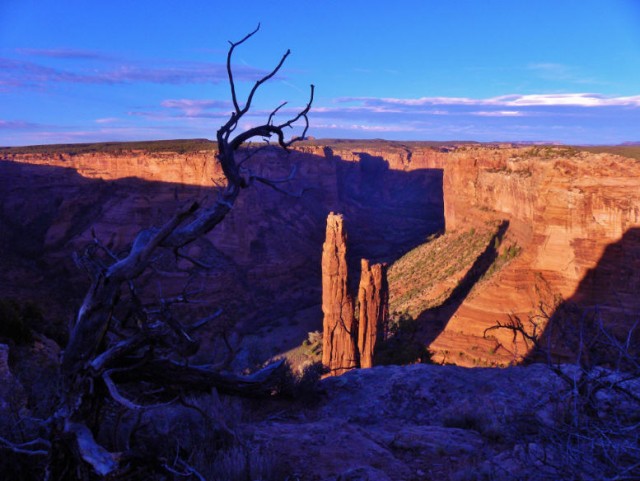
My haiku in response to Ghosts ~ Pic and a Word Challenge #92 is third in a trilogy that began with 2 in the original version of a previous post.

Widower’s Song #3
Ghosts do not haunt me.
Remembered joys can often
overcome regrets.
My haiku in response to Ghosts ~ Pic and a Word Challenge #92 is third in a trilogy that began with 2 in the original version of a previous post.

Widower’s Song #3
Ghosts do not haunt me.
Remembered joys can often
overcome regrets.

Like the conflict between living in the moment and planning for the future, abstract/concrete (or general/specific) is a conflict that can only be managed, not avoided or resolved. Trying to be 100% one or the other does not work. We must muddle thru, preferably with awareness that what works for one person at one time will not work for all people at all times. This post muddles thru the abstract/concrete conflict with a mostly abstract tanka inspired by excerpts from the mostly concrete poetry in 2 posts by others.
Consider the first of 4 stanzas posted in {underground (20170523)}:
© Crow
i have learned the hard way
that just because something
has been buried does not mean
it’s dead
It could stand alone as a fine short poem. It also inspired the fourth of 7 short stanzas posted (along with an interesting biographical sketch of the 17-th century painter Caravaggio) in {Caravaggio Dreams}:
© Poet Rummager
Do you not see what I’ve buried deep,
has dug itself out to find me?
Maybe it’s because of my math background that I felt these excerpts were more powerful standing alone than in their original contexts, with concrete details about zombie cannibals and Norse gods (Crow) and a dream encounter with Caravaggio (Poet Rummager). While I do prefer cremation to internment and do appreciate Caravaggio’s pioneering of expressive chiaroscuro, I found all those details distracting. I was moved by the quoted stanzas despite what went with them.
One of the virtues of haiku poetry is that there is scant room for anything irrelevant, so I tried putting my takeaway into a haiku. But I found that format a little too restrictive. What happened after whatever was buried deep had dug itself out? My haiku left open the possibility that it might have just toddled happily away, w/o the ominous implications of the first line from Crow’s stanza and the last 3 words from Poet Rummager’s stanza. Wanting my poetry to be forthrightly ominous rather than ambiguous, I extended the abstract haiku to a tanka with (as it happens) concrete imagery in the 2 added lines.
Empty Grave
I buried something
that was not already dead.
It dug itself out.
~ ~ ~ ~
It shook like a wet dog and
followed my scent to find me.

Tho a uniform level of abstraction might be nice, I can live with the muddle. At least in visual art, the distinction between abstract and concrete is somewhat muddled anyway (and not just because of photography).

Here is a little silliness with self-reference in response to [Diminutive ~ Pic and a Word Challenge #90], which displays a good use of a long word.

Wanting Five
Ah, “diminutive”!
Big word for “tiny” fills out
first line of haiku.
Hmmm. Would anybody want a long synonym for “tiny” in a 5-7-5 haiku? Nah.
BTW, self-reference in language really is a big deal, as explained (among other places) here and here. It has also been joked about in other haiku. Some examples are here and here.
Originally posted by Patrick Jennings in
[Evanescent ~ Pic and a Word Challenge #89]:

Seize the Sunrise
Evanescent dawn.
Do hills endure forever?
No, but long enough.
~ ~ ~ ~
Art subverts time with pixels;
the moment also endures.
© Adjei Agyei-Baah
ancient road…
the trails of the masters
absorbed in fallen leaves
© Mellow Curmudgeon
Footprints fade but insights shine,
lighting the path forward now.

In some ways, a century ago is already ancient. Photography’s pioneers worked with nasty chemicals in darkened rooms to produce grayscale prints. Modern photographers can (and should!) honor them by pressing forward and building on their work in our digital world of colored pixels, using grayscale (or partial desaturation) only as appropriate for specific images.

Stained Glass in Spring
Leaves and seeds glow as
sunlight nourishes new life.
Cathedral window.
As my earlier post in praise of dandelions noted, the same spunk that frustrates prissy gardeners also thrusts green and gold into the grayest and grimmest of our cityscapes. I like that tradeoff, so I am glad I can respond to

But the volleyball hit the floor before I could whack it upward.
That last comment in the cascade included a question about a haiku titled Thus Saith the Lord:
What made U the lucky poet whom God speaks thru?
While the comment’s “U” is me and my claim to prophecy was indeed tongue-in-cheek (and perceived as such by the commenter), I could not get past the fact that many people do claim (seriously and stridently) to speak for God. Many of those who are serious and strident are also willing to coerce people they cannot convince. Many of those who are willing to coerce are also willing to kill people they cannot coerce.
• NON SEQUITUR © 2014 Wiley InkWhile I could not just keep it tongue-in-cheek, I still saw the wisdom in Oscar Wilde’s remark that life is too important to be taken seriously. So I continued semiseriously, with a draft for a weird story to end the original 2017 version of this post. I have removed the draft here because the story has been thoroughly revised and now appears in an anthology of weird stories as Satori from a Consulting Gig. The revised story was also posted to this blog, after I created an appropriate illustration.
I blanked out part of a comment from 2017 that appears below, so as to leave it for the story to reveal the who and how of a weird instance of satori.
We add 2 lines to a haiku by Nozawa Boncho in response to
silent now, the tree will sing
(thanks to the koto maker)
The following photo of comes from the Witterings blog, which also has a fascinating discussion and beautiful closeup photos of the window’s details.

When God finally rested, did He just chill out? In response to
(with some inspiration from The Write Idea | Six days), here are 2 haiku dealing with that question.
First Sabbath
After 6 hectic days,
writer’s block dissipated.
God wrote a haiku.
Thus saith the Lord:
The world I made
is bigger and better than
dogmas can describe.
Before responding to the CDHK episode
Carpe Diem Universal Jane #14 Basho’s “Old Pond”
I want to display my favorite translations of Basho’s famous “Old Pond” haiku.
Basho’s haiku illustrates why I respectfully disagree with the Haiku Society of America’s definitions of the words [haiku] and [senryu]. So does my haiku in response to this episode. Yes, “haiku” (not “senryu”) is what I said.
Old Pond Revisited
Basho’s frog can jump
over lines drawn in the mud.
Haiku? Senryu?
A recent post by Christy Draper on Dancing Echoes honors the start of the epic autumn migration of monarch butterflies with a photo and a haiku, both beautiful. After effectively reblogging that post below, I continue the story with another haiku and a tanka.
When I worked in a building with a glass wall overlooking a broad lawn, I sometimes drew strength from the sight of migrating monarchs trudging thru the air with steady wing beats. They were doing what they had to do, and I returned to doing what I had to do.
Originally posted as Autumn Monarchs | Dancing Echoes:

Migrating Monarchs
Tumble from atop the trees
Black and orange leaves
• • •
Monarch butterflies
migrating to Mexico:
orange wings of will.
~ ~ ~ ~
Tiring as I trudge
toward an unseen distant goal,
I see the monarchs.
Mexico is far away,
but they will get there someday.
The recent Blogoquent Competition calling for a description of life in a single sentence was won by Katrina, whose concise and eloquent entry posted in Calliope Writing struck me as being much like a haiku. Hmmm. One can indeed get a decent haiku by simply adding obbligato line breaks to the winning sentence:
Haiku Draft #1
Life is a journey
in which nothing is permanent and
everything is precious.
While I do not freak out because this haiku breaks the 5-7-5 Rule and lacks a clear fragment/phrase boundary, I believe that rule violations need better reasons than
The competition is over. We are free to use 2 sentences now. A better haiku emerges:
Haiku Draft #2
Life is a journey.
No things are permanent and
all things are precious.
Hmmm. Do I have an image to illustrate this post? I do, and it suggests another tweak:

Happy Heraclitus
Life flows and splashes.
No things are permanent and
all things are precious.
From
Five Haiku Poems: Balance | Poet Rummager:
Image by Jiang Daohua | Dreamstime.com

Nobody who is
always gloomy can stay sane.
Set your laughter free.
Allow happiness
to handspring into your grin –
spreading joy within.
Nobody who is
always happy can be sane.
Let your tears flow, too.
Allow the sadness
to somersault down your face.
Tumbling tears you’ll taste.
Staying on the beam
is a challenge, unless you’re
a world class gymnast.
Haiku poetry by Mellow Curmudgeon and Poet Rummager
A Google image search led to the images in this post; clicking on them will jump to the source credits at the end. The haiku in this post is my response to
Carpe Diem Universal Jane #8 gathering clouds
with special thanks to one of Jane’s haiku about winter:
© Jane Reichold
gathering clouds
heavy and dark with holding
unfallen flakes
Quiet Endurance
Cold. Pond iced over.
Silent snow on tomb-like mound.
Beavers wait it out.
However bleak and dark it may be, winter is unlike the bleak dark periods of history. Winter’s onset and duration are roughly predictable. Like beavers, those who prepare can often endure. Too bad history is not like that.
I wrote the haiku while commenting on a wintry post by Poet Rummager that I liked. The post did not mention snow or beavers, but inspiration is quirky. Tho I liked my haiku enough to post it all by itself, I decided to wait until I had found images that would clarify it for readers unfamiliar with the way beavers wait out winter in their lodges. Those who would like to see more detail can find it on a very readable webpage that was created for course requirements at Hamilton College.
The photo of the outside of a lodge in winter is from a well-illustrated post by Harlan Schwartz on the Canadian Canoe Routes website. The photo was shared on PhotoBucket and downloaded from there.
The drawing of the inside of a lodge in winter is from the book Why the Adirondacks Look the Way They Do by Mike Storey (Nature Knows Best Books, 2006). The drawing was reproduced in a very positive online review by Paul Grondahl and downloaded from there.