engineering, humor, philosophy

How My Blog Became Phone-Friendly

The tweetable answer is that I switched to the Satellite theme.  U can get a wry take on the sometimes quirky path of progress by reading the rest of this post.
(BTW, the [Menu] button atop the vertical black bar reveals the widgets.)

The tweetable answer is that I switched to the Satellite theme.  There are more things in heaven and earth than are dreamt of in Twitter’s philosophy (and I don’t tweet anyway), so U can get a wry take on the sometimes quirky path of progress by reading the rest of this post.

When I started blogging, I wanted a genuinely uncluttered theme that would leave me free to concentrate on content and decide whether I wanted to continue, w/o paying upfront with $ (for a premium membership) and with time (spent customizing).  I wanted black text in a sans serif font on a white background, with lines long enough and vertically separated enough for a readable brief essay w/o too much scrolling.  I also wanted something that was (and still is?) rare among uncustomized themes: I can print out a preview of a draft, get hard copy that looks very much like what the browser displays, and scribble notes about revisions.  Yes, I am that old.

Browsing the theme catalog was a dreary experience, and I found that the only good way to see what my own stuff would really look like was to adopt a theme temporarily and hope nobody was turned off by how ugly my blog was before I found and switched to something better.  After several false starts, I settled on Academica.

A post on Horizon Feedback on 2015-09-14 asked users to beta test changes to “the” WordPress.com editor (the “Beep-beep-boop” editor reached from the WordPress interface with a blue top bar).  Tho I usually used the other editor (the “Classic” editor reached from the WordPress interface with a black top bar), I decided to help out a little.  Improvements in “the” editor might lead me to use it more and enjoy the nice colors.

I started drafting a post, observed the result of clicking the [Preview] button, and submitted a comment including the complaint that

What comes up … is horizontally truncated, with the 1st letter of each line flush against a sky blue border on the left and the last few letters of each line hidden under a vertical scroll bar for the frame containing the draft purportedly being previewed.

Sheri at WordPress looked into the problem promptly and found that it was 2-fold.

  1. The preview was coming up in tablet mode, with no provision for changing the mode to either desktop/laptop or phone.
  2. My theme was not responsive to the kind of device (desktop/laptop, tablet, or phone?) in use.

Sheri and friends fixed #1 soon after, adding buttons that would let a blogger working at (say) a desktop/laptop see how the previewed post would look on (say) a phone:

PreviewButtons

Fixing #2 by switching to a responsive theme would of course be my responsibility, and now I could see how utterly unreadable my posts were to anybody browsing on a phone rather than a real computer.  Remembering how dreary theme shopping was, my initial reaction was curmudgeonly.  I was writing for people who use real computers, not people who surf while standing in line at Starbucks, so I would stay with Academica.

On the other hand, I can remember when the only real computers filled rooms with refrigerator-sized boxes and ran up huge electric bills for power and cooling.  I have also been a frequent visitor to a nursing home and noticed that the aides could sometimes get a brief respite from their jobs by enjoying things like cat videos on their phones.  However unlikely it was that an aide might want to read my blog on a quick break, they should not be forced to look elsewhere just because I am an old fart with an unresponsive theme.  So I resolved to fix #2.  Someday.

When someday finally came in 2016-04, I found that theme shopping is easier now, with a preview capability that lets me see how one of my own posts would look on a phone rather than just how a demo would look on a computer.  I also had plenty of my own posts to play with.  With some experience in blogging, I was willing to forego printed previews.  I could tolerate crappy printing and be content with a theme whose perversities in displayed pages either were minor enough to ignore or could be worked around by adding attributes to a few HTML tags.  (As a frugal Yankee, I still wanted to avoid paying for extensive customization unless I actually needed it.)  Several themes looked OK until I saw what they did to block quotes: they maimed them with an ugly distracting decoration.  I was a big user of block quotes and did not know how to work around this sin.  I did know how to work around Satellite’s sin of using an absurdly light font color for block quotes, and I can bypass the use of a similar font color for my tag line by not having a tag line.

So I switched to Satellite and went over all my posts, retrofitting them with a few workarounds, a few small unrelated updates I had been intending to do someday, and a few small wording changes to make the flow of text around narrow images look good on all devices.  Only 1 post required nontrivial rearranging to look good on a phone.  The whole process took roughly 4 times longer than I had expected, as is common in software engineering.

MenuButton

There is a great virtue of Satellite that should be mentioned: the retractable sidebar.  Apart from the click-me-for-a-menu button at the top, the retracted sidebar is an unobtrusive black band along the left side of the post.  Clicking that button reveals widgets like the [Follow] button and the Search box.

SearchGreenFuzz

Press the [Enter] key after entering a few words, and U will get a display of that search’s hits.  There is just 1 hit for the specific words illustrated here:

TrojanHorse

Clicking on the title of that search’s single hit will visit a whimsical introduction to one of the 20-th century’s epistemological earthquakes.  It’s OK if U don’t give a rat’s ass for epistemology; the secret revealed at the end is useful in daily life and does not depend on anything else in the post.  Even if U skip the post’s mental exercise, please do consider why I displayed a screen shot with the search words instead of putting them in the text of this post.  Extra credit for all who can explain how the answer to that question relates to the earthquake.

growing old, haiku, humor, mundane miracle, photography

Mundane Miracle – Pond

A consolation for the decreased mobility that comes with age is an increased appreciation of mundane miracles close to home. One example is considered here; I hope to post a few more in coming months.
(BTW, the [Menu] button atop the vertical black bar reveals the widgets.)

Long ago, I drove/flew/drove to a motel in the town on the western edge of Rocky Mountain National Park in Colorado.  Soon afterwards, I hiked into the park, admired an alpine lake, ate a trail lunch, and hiked out in a thunderstorm that mocked my “waterproof” boots.  Nothing epic, but well beyond me now.  That’s OK.  I did it once (which was more than enough for the thunderstorm part).

Some people consider it a miracle when the government does something right.  Over the years since that trip to Colorado, the EPA adopted (and enforced!) vehicle emissions standards.  I can walk the roads near my house w/o being assaulted by trucks and school buses belching black diesel crud.  Their exhaust is still smelly and unhealthy, but not bad enough to ruin a walk on a breezy day.  So I can often walk about 1.5 miles to the far end of an artificial pond beside the road.  An artificial pond ringed by hilly pasture land is not the same as a natural lake ringed by mountains, but water is water and blue sky is blue sky.

sparkle-geese

kiyawana-sky

After a few rainy days, excess water in the pond rushes thru a culvert under the road and into the little brook that was dammed to create the pond.  I can admire the exuberant splashing on the rocks in the brook w/o dwelling on the artificiality of the scene.

outflow
outflow-closeup_ObjRem


Sound of Sunlight
|Rushing waters bring
|joy to those who hear them sing
|and see them sparkle.

Happy Heraclitus
|(added 2018-06-07)
|Life flows and splashes.
|No things are permanent and
|all things are precious.

haiku, history, humor, politics

Rhyming Haiku: Couplet and Triplet

I enjoy smuggling rhymes into blank verse but have not yet gotten all 3 lines of a haiku I really like to rhyme.  My response to Carpe Diem #932 silk tree is a pair of all-new haiku.  I do like the one with a couplet.  The one with a triplet (plus an internal rhyme in the title at no extra charge) is submitted in the spirit of Abraham Lincoln’s corny jokes during the American Civil War: I laugh so that I will not cry.

Sound of Sunlight
|Rushing waters bring
|joy to those who hear them sing
|and see them sparkle.

Silly Rhymes for Scary Times
|A rhyme in blank verse?
|President Trump would be worse.
|Vote Dem or you’ll curse.

US_flag_inverted

Image Source

A public domain image of the American flag has been turned upside down to reflect the current state of US politics.

(BTW, the [Menu] button atop the vertical black bar reveals the widgets.)
haiku, humor

Indigo

Some of my own humorous haiku are blue and/or dark; some are just silly.  Here are a few responses to


Mission Accomplished?

Ant with wings staggers,
then dies. Did I see him smirk?
Had he banged a queen?

Vampire Bunny

With coprophagy
as the alternative,
you might suck blood too.

Why Tall Men Walk Slowly in Gardens

A short-handled rake
waits (teeth up) to deliver
a clunk in the junk.

Silver Savior

The crowning glory
of our civilization
is, of course, duct tape.


haiku, history, humor

Time for a Haiku about Time

Historians give us the next best thing to traveling backward in time, so as to look over the shoulders of our predecessors and see how they coped with their predicaments while planting seeds of ours.  Of course, we cannot really do that.
(BTW, the [Menu] button atop the vertical black bar reveals the widgets.)

The protagonist in H.G. Wells’ novel The Time Machine travels fast forward in time, temporarily (!?) separating the passage of time in his own life from the passage of time in the world at large.  Of course, we cannot really do that either.

rod-taylor-time-machine_940x424

On the other hand …

Is Time Travel a Fantasy?
|No.  It just happens
|(whether we like it or not)
|on a fixed schedule.


The still from the 1960 film version of The Time Machine that appears here has been cropped to fit well on this page; it appears in an interesting post on TimidMonster.com.

birds, food, haiku, humor, seasons

Spring from Another Viewpoint

A few seconds near the end of the delightful music video from a CDHK episode have inspired a haiku that looks at a familiar subject from an unfamiliar viewpoint.
(BTW, the [Menu] button atop the vertical black bar reveals the widgets.)

I consulted the plants in my yard for my first response to

Carpe Diem Special #194
A Trip Along Memory Lane — with a twist
,

but I did not consult my plants this time.  They might be shocked.

Spring from Another Viewpoint
|One fat little bird
|welcomes spring in its own way.
|Cherry buds are food.

humor, photography, science, seasons, serendipity

Serendipity with Squid

Did I superimpose 2 images to create a (clumsy) visual metaphor about the interconnectedness of life?  Nope.  The story begins millions of miles away.  It ends on a window pane.
(BTW, the [Menu] button atop the vertical black bar reveals the widgets.)

HeronSquid_581x684Hmmm?  A ghostly translucent squid seems to hover in midair between the viewer and nesting herons.  No, I did not combine a heron image with a squid image in my photo editor.

The story begins millions of miles away, where the sun emits photons even more copiously than the pols emit factoids.  Minutes later, a tiny fraction of the photons bounce off a neighbor’s window, pass thru my window, and hit me in the eye.  There are many ways I would love to emulate people like Bach or Galileo; going blind is not one of them.

Yes, I could pull the drapes. But only a small portion of my window needs to be obscured.  Would rather not waste winter sunshine.  Yes, I could buy a window decal.  Most of the decals I have seen are cutesy.  The rest make a statement:

I am as ugly as a warthog with zits,
but the jerk who owns this dump
bought me as a decoration.  Ha!

Of course, I am dissing only the decals I have seen, not any other decal U may have and like.

The Dec/Jan 2016 issue of National Wildlife magazine has photos from the annual NWF photo contest, including a photo of nesting herons by Mario Labado and a photo of a squid by Jackie Reid.  I read the magazine on paper (yes, I am that old), and it so happens that the photos are on opposite sides of the same thin sheet, w/o much else to clutter what is seen when bright light passes thru.  The fraction of duplex printed sheets that look at all good when both sides are seen at once is like the fraction of photons emitted by the sun that bounce off my neighbor’s window:  tiny.

So I cut out the sheet and taped it to my window.  The image of the squid is actually on the far side; the illusion of being closer than the herons is the same in my house as in my photo.

The composite image is indeed clumsy as a visual metaphor for the interconnectedness of life, but it does tone down the excess sunlight.  It cost nothing beyond what I already spent to help support the NWF, and it looks better than a warthog with zits.

haiku, history, humor, politics

Long After the Sixties

When will things slide …

from liberty to anarchy?

from growing to shrinking?

from bravery to bravado?

from firmness to fascism?

from hope to rage?

The answer, my friend, has blown in on the wind.

The answer has blown in on the wind.

Fiscal Responsibility
|Debts rise; incomes fall.
|Hard times demand bold action:
|tax cuts for the rich!
 

baseball, flowers, haiku, humor, photography

Orange and Blue

The [Menu] button (atop the vertical black bar) reveals widgets like the Search box.  Typing just the [Enter] key into the Search box is a way to browse WordPress blogs.

orange-blue_938x337I had no interest in baseball during my misspent youth.  My late wife had some interest in it, her interest was contagious, and we had become casual fans of the NY Mets by the time they won their 2nd World Series in 1986.  With stamina unthinkable today, we saw the sights in Washington DC by day and watched much of the 1986 World Series by night, on the big TV in our motel room.  There were no games on the nights of travel days, but we managed.

While fans of the NY Yankees got to see many more wins over the years, Mets fans got to see more strategy because there is no designated hitter in the National League.  A great baseball team has an unusual combination of strategic leadership, individual initiative, and teamwork.  It is like a great army, but nobody gets killed.  Moreover, a not-great team can try again next year.

Tho definitely not a great team in most years, the Mets did and do have great colors: a strong orange and a strong blue, much like the colors in my photo.  Many fond memories of 1986 were refreshed by seeing orange and blue on a great postseason team in 2015, in addition to seeing them on foliage walks.

October is blessed with a riot of reds and yellows (and some persistent bright greens), as well as the glorious oranges of many of the sugar maples (Acer saccharum), some of the red maples (Acer rubrum), and NY Mets uniforms (but only in a few special years).  One color I seldom see in October is pink.  In 2015 I saw that also.

cactus_oak_888x504

Willful Cactus
|My “Christmas” cactus
|blooms whenever it pleases.
|Pink for Halloween!


haiku, humor

Pegasus

Tho childhood fantasies about flying horses are long gone, I can see the upside.  I have 2 favorites to share before my own take on Pegasus.
(BTW, the [Menu] button atop the vertical black bar reveals the widgets.)

In response to Carpe Diem #825 Pegasus:

I have 2 favorites to share before my own take on Pegasus: Chèvrefeuille’s beautiful Hippocrene-inspired image and Haiku Plate Special’s charming reminder of the way I and so many others were introduced to Pegasus.

© Chèvrefeuille
|after the rainstorm
|horses galloping through puddles
|droplets of poetry

© Haiku Plate Special
|winged horse
|flying through my childhood
|Mobil Gas

Tho childhood fantasies are long gone, I can be good-humored about practical matters.|

Pegasus
|Ever been shat on
|by a bird? Be glad there are
|no flying horses.

Pegasus_RM_450x450
Perhaps the image credit requested by the Rijksmuseum refers to a likeness of Persephone on the other side of a coin? Perhaps some copy-then-tweak editing did not go far enough? A magic spring with water that ensures complete editing would be a worthy companion to Hippocrene.
haiku, humor, photography

Various Viewpoints

To a female mosquito, I look like lunch: a big bag of nice warm blood.  From her viewpoint, my birdbath was a good place to lay eggs after lunch.  But then I rigged a hose to drip into it.  The drip also made the water better for washing down a bird’s caterpillar lunch.  I have another view of what makes a good lunch; my friend has yet another view.
(BTW, the [Menu] button atop the vertical black bar reveals the widgets.)

To a female mosquito, I look like lunch:  a big bag of nice warm blood.  The bag is annoyingly mobile, but she is also mobile and is quite good at using a mix of cues (chemical, thermal, and visual) to home in on the bag.  Then it will be time to lay eggs.  From her viewpoint, my birdbath was a good place for egg laying until I rigged a hose to drip into it.

birdbath-ripple_840x312
The dripping also keeps the birdbath full and makes it more attractive to the birds, who consider it a good place for a sip of water and sometimes a bath.  From the birds’ viewpoint, it never was a good place for egg laying.  I am glad that the mosquitoes have finally come around to the birds’ opinion.

Blood for lunch does not appeal to me.  Neither do caterpillars, so I do not compete with any past or present birdbath visitors for food.  I eat something healthy (from a human viewpoint) and finish off with something obscenely healthy: a few raw carrot sticks and then a few raw snow peas.  (That lets me get away w/o brushing my teeth after lunch.)  I also view the veggies as colorful objects to be arranged in a very temporary display on the plate before they become ugly mush that is mercifully out of sight.

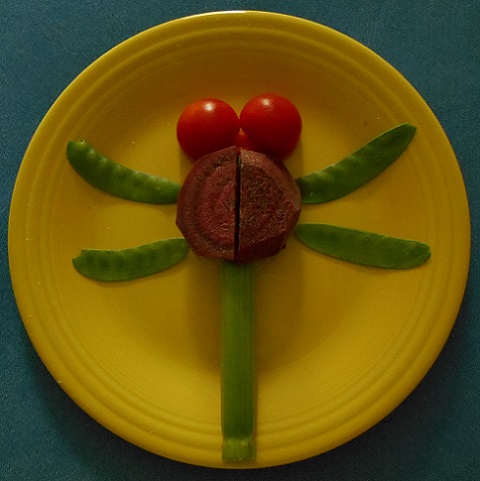
A few days ago, I happened to arrange my lunch veggies so as to look a little like a dragonfly, with snow peas as wings.  Hmmm.  Maybe I could pull more veggies from the fridge and make an arrangement that looks a lot like a dragonfly to me. (No real dragonfly would be fooled.) This little project reminded me that a dragonfly is the enemy of my enemy, and thus my friend.

Dragonfly_480x481

What’s for Lunch?
|Mosquitoes in flight
|are seen as meat on the hoof
|by a dragonfly.

(reblog), haiku, humor, photography

A Falling Sound

(BTW, the [Menu] button atop the vertical black bar reveals the widgets.)

 
The photo by Dancing Echoes reblogged below has inspired another haiku.

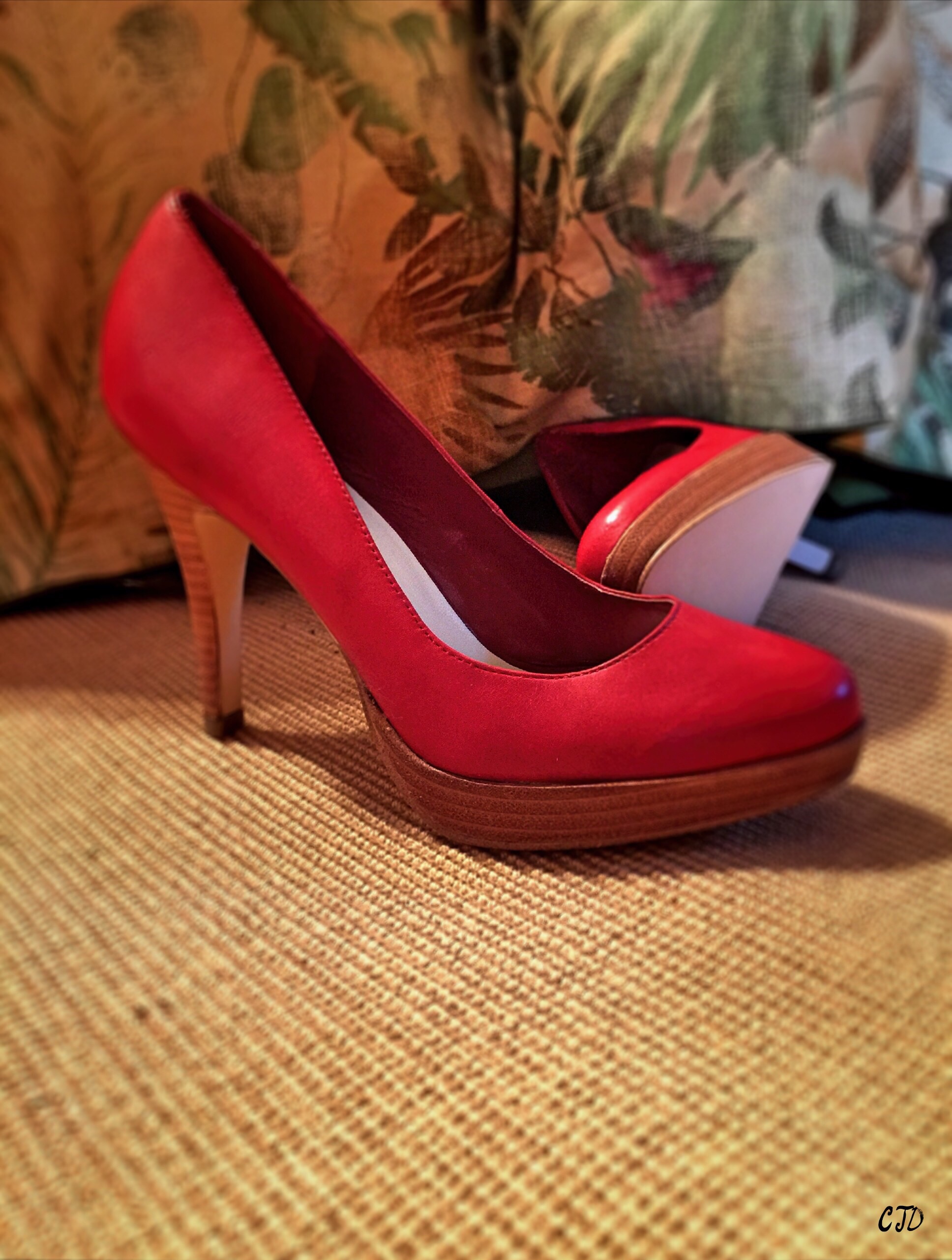
         A flipped coin may land
         on edge. Erect, her dropped shoe
         mimics his penis.

 
At my age, on the other hand, those high heels and narrow toes scream “Bunion City!”

Dancing Echoes's avatarDancing Echoes

image

Shoes dropping to floor
Quickened anticipation
Clothes fly in frenzy

In response to CARPE DEIM HAIKU KAI: On The Trail With Basho Encore 5 a falling sound

View original post

haiku, humor, math, philosophy, science

Could a Long Fly Ball Hit a Flying Horse?

This is one of the few times I need to put some fiction into my blog, so I will change font for a little while.

Plato

Sometimes it is hard to be fair to Plato.  He is basically a good guy, but his politics are bullshit.  That “philosopher-king” notion is so self-serving.  Then there is that cave shtick.  Most people know that philosophers can be a little klutzy in everyday life.  We give them some slack and don’t make a big deal of it.  But Plato says the wannabe king has been looking at ultimate reality and absolute truth (and maybe a pretty girl sunbathing?) in bright daylight, so he stumbles in the cave that passes for the real world among ordinary Joes.  After his eyes adapt to the dim light, he will govern just fine.  No way.

Feeling mellow enough to ignore Plato’s politics, I invited him over to watch a baseball game on TV.  He was surprised that the pitcher threw a ball rather than a discus or a javelin, and that nobody was naked.  But he is a smart guy and soon understood the duel between the pitcher and the batter.  He noticed the (4 balls or 3 strikes) rule for ending an at-bat and said something about the ratio 4:3 in music by The Pythagoreans.  Are they a band I don’t know about?  He broke into a big grin when a batter sent a long fly ball arcing high above the field.  Tho he knows zip about physics, he hangs out with Euclid and knows a parabola when he sees one.


To Plato, the path of the fly ball in the grungy everyday world is an imperfect realization of the timeless perfection of an ideal parabolic form.  To me, the description of the path as a parabola is a good approximation that ignores air resistance and wind.  Ignoring those things is OK in an introductory physics course.  It is not OK in a baseball game.

Pegasus_RM_450x450

Using the parabola to describe the fly ball oversimplifies a staggeringly complex everyday world that emerges from a staggeringly weird tarantella of elementary particles.  Our use of the parabola is fundamentally a story we tell ourselves.  Unlike the story of Pegasus the flying horse, it has been corrected, refined, and integrated with many other stories by scientific processes.  The notion of a flying horse is appealing (to people who have not been hit by a bird splat).  The parabolic story is ultimately more satisfying, as part of something gloriously predictive and useful (despite not being much help to the outfielder running to catch the fly ball).

Pegasus himself is as limited in time and space as the Pegasus story: an idea created by some people at some time and place, elaborated and spread by other people at other times and places.  The Pegasus story will vanish and its starring horse will vanish with it, if we succeed in our current efforts to make the Earth uninhabitable long before we can go elsewhere.  Would the parabolic story vanish also?  That is a question for another time.  The mathematical cast of characters in the parabolic story, on the other hand, is special.  Very special.

Plato’s Challenge
|Three plus two was five
|before any mind could know.
|Where do numbers live?

My snapshots of Plato and of Pegasus could not get thru the time warp, but I did some cropping of public domain images with good likenesses.

(BTW, the [Menu] button atop the vertical black bar reveals the widgets.)
haiku, humor

On Rules: Moral Hazard; 5-7-5; …

A discussion of the Moral Hazard Rule could bog down in controversy.  So I will discuss something simpler and less important by itself, but good for illustrating the vital difference between respecting a rule and worshiping it.
(BTW, the [Menu] button atop the vertical black bar reveals the widgets.)

The difference between respecting a rule and worshiping it can be vital, as with economists’ Moral Hazard Rule against bailouts and the like.  A discussion of the Moral Hazard Rule could bog down in controversy over who is to blame for a mess, who is suffering, who has a hidden agenda, and so on.  So I will discuss something simpler and less important by itself, but good for illustrating that vital difference.  Please remember that difference the next time U hear somebody who worships a rule arguing with somebody who ignores it.  Maybe each of them is partly right and partly wrong.

The 5-7-5 Rule says that a haiku is a 3-line poem in blank verse, where the lines have syllable counts of 5, 7, and 5.  Tho he was razzed intensely at the time, Bill Clinton had a point when he fussed about what “is” means.  Does the rule say how the word “haiku” is (or should be) used?  By whom?  Does the rule specify the essence of haikuness?  My own attitude is both traditional and pragmatic, more nuanced than I can express in 3 lines.

I first encountered the 5-7-5 Rule as a junior in college, back when students used typewriters and people with scholarly aspirations kept bibliographic info on 3×5 cards.  (Yes, that long ago.)  A friend was interested in Japanese culture, but not so interested as to learn the language.  He was enthusiastic about some short Japanese poems that, as translated into English, were limp and vague.  Poetry is notoriously difficult to translate, and my friend explained that these translations had the special burden of being translations of haiku, using the 5-7-5 Rule to define a word that was new to me.  My friend said he was settling for bad poems in English that began as good ones in Japanese, and that people cannot write haiku in English anyway, in part because we do not have Japanese calligraphy.  I took the purported impossibility as a challenge.

After some scribbling and counting, I put a 3×5 card in my typewriter, banged on a few keys, and silently handed the card to my friend.

The card had 3 lines:
|Haiku written on
|a typewriter: ultimate
|incongruity.

We shared a laugh and I kept the card.

In the course of about 50 years, I eventually wrote about 50 haiku, all conforming to the 5-7-5 Rule.  While thinking about ways I might publish some of my haiku, I did some web browsing and found many haiku that I liked, including

© Alexis Rotella
|Just friends: …
|he watches my gauze dress
|blowing on the line.

I barely noticed the violation of 5-7-5 and did not mind it at all.  Some time later, Lew Gardner sent me a handout from the haiku class he teaches, with examples that included Just friends: … and

© Anita Virgil
|walking the snow-crust
|  not sinking
| sinking

Now the violation of 5-7-5 is integral to the imagery!

Anybody who gripes about the foregoing violations of 5-7-5 is just being churlish.  Anybody who is oblivious to 5-7-5 is missing much of the fun in a successful translation of one of Basho Matsuo’s haiku:

© Harry Behn
|An old silent pond…
|A frog jumps into the pond,
|splash! Silence again.

I needed strict observance of 5-7-5 to prove a point long ago, but the 5-5-5 of my last borrowing from Lew’s handout is close enough to support a funnier joke with a haiku that refers to itself.  I salute whoever topped my first effort with the classic

© Unknown
|You have just started
|reading the haiku
|that you just finished.

Far from being hidebound about tradition, I often write on oddball topics, always provide titles, and sometimes write 3 lines that would be unintelligible w/o stage setting by the title.  But I also honor tradition with a serious effort at abiding by 5-7-5.  So far, I have almost always been happier with the result (of all the heating and hammering that effort entailed) than with the looser early version that I brought to my wordsmith’s forge.

Abiding by 5-7-5 has been helpful to me; I recommend giving it a try.  The precision of 5-7-5 is also appealing, and I deeply appreciate the importance of precise definitions in math.  I also know that poetry ain’t math.

Who Miscounted?
|This so-called “haiku”
|ignores five-seven-five, so
|it’s not a haiku.

haiku, humor, music, philosophy

Wordless Wisdom

Can there be such a thing?  Tho unable to offer a strong argument, I believe so.  (There definitely can be wordless knowledge.)  The notion of wordless wisdom is not preposterous, despite the conditioning we inherited from Socrates.
(BTW, the [Menu] button atop the vertical black bar reveals the widgets.)

Let’s start with something easier than wisdom.  The canonical example of wordless knowledge is how to ride a bicycle.  There is much that can be said about riding a bike, but how to do it cannot be put into words and/or formulas.  Millions of children know how to ride their bikes w/o knowing anything about the underlying physics.  On the other hand, one can have the physics down cold and still not know how to ride.  Many kinds of knowledge can and should be written down, but definitely not all.

Verbal and nonverbal knowledge can work together, which is the main reason that baseball teams have hitting coaches and pitching coaches.  To keep this post simple, I will ignore that possibility for wisdom.  Sometimes it is better to be simplistic (with an understanding about wiggle room) rather than precise (but ponderous).

The notion of wordless wisdom is not preposterous, despite the conditioning we inherited from Socrates asking people to tell him what virtue is and then being dissatisfied when the only verbiage they can supply is a list of a few virtues, with or w/o “and so on” after the specifics.

I am among the many people whose response to some great pieces of music goes beyond ordinary enjoyment.  The last movement of Beethoven’s last piano sonata seems to hint at something important (as well as beautiful) that resists verbalization.  Maybe it is just subjective; other music lovers have differing lists of transcendent works.  Maybe putting “just” in front of “subjective” is unwise.

If the foregoing sounds addled, let me proclaim my (slightly qualified) devotion to Wittgenstein’s Laws:

  1. What can be said at all can be said clearly.
  2. Whereof one cannot speak, thereof one must be silent.

My only reservation about #1 is a request for a footnote remarking that clarity often does not come easily.  With #2, I see a little wiggle room in interpreting “be silent” (or “schweigen” in the original German text).  Does it rule out images?  Instrumental music?  Singing in a language the listener does not understand?  Fortunately for me, I do not understand enough Latin to get distracted by the words in sacred music and thereby risk misunderstanding the nonverbal wisdom it conveys.

Hildegard of Bingen, 1098-1179
|Mystic visions or
|migraine headaches? Whatever.
|Her music lives on!

Memo to Mystics
|Unless you can grab
|bubbles, you cannot put your
|wisdom into words.

soap-bubbles