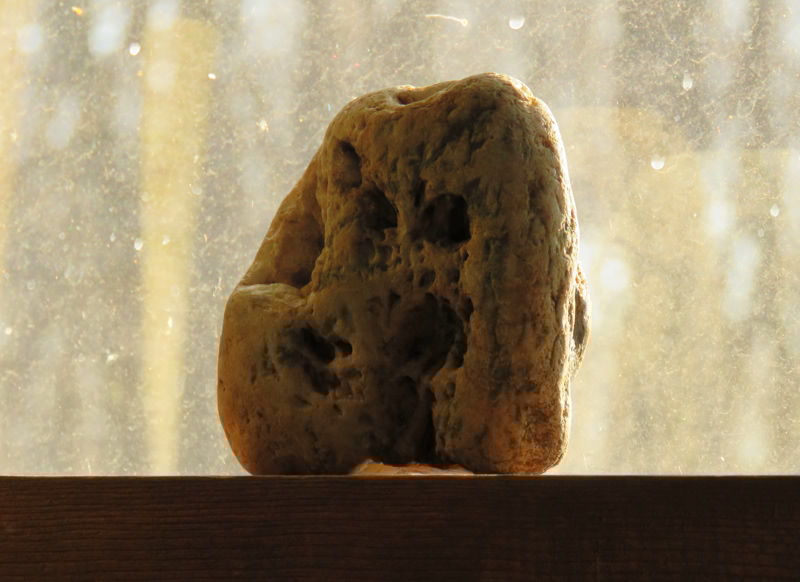
Sunlit Moment
Mums are good silk fakes.
Rock is real and will outlast
both mums and viewer.

Dunno why the WordPress algorithm for choosing “Related” posts missed the one that is by far the most closely related: Weather’s Works.

Sunlit Moment
Mums are good silk fakes.
Rock is real and will outlast
both mums and viewer.

Dunno why the WordPress algorithm for choosing “Related” posts missed the one that is by far the most closely related: Weather’s Works.

© Patrick Jennings | Dig ~ Pic and a Word Challenge #219
Low Tide at Seaside Creek Beach
To dig for clams is why
we are here, beneath this sky.
No clams? No problem!
The first is for anybody who noticed that changing the haiku’s initial line
To dig for clams … ⇒ Clam digging …
would make the haiku comply with the 5-7-5 rule. The second is for anybody who noticed that the version of the initial line with 6 syllables has a better rhythm. The actual editing change was from 5 syllables to 6. Does that seem like an odd direction to move?
The outside story says that a haiku “is” a 3-line poem in blank verse with syllable counts 5, 7, and 5. While this story is oversimplified, it is still a good place to start. (Some haiku poets disagree.) The inside story is more complex. Various poets bend or break various rules at various times for various (and often good) reasons. Tho messier, the inside story is ultimately the better one. Just ask the clam digger who went home with an empty bucket but a full heart.
Carpe Diem #1781 The Quest For A New Masterpiece Continues … colorful autumn

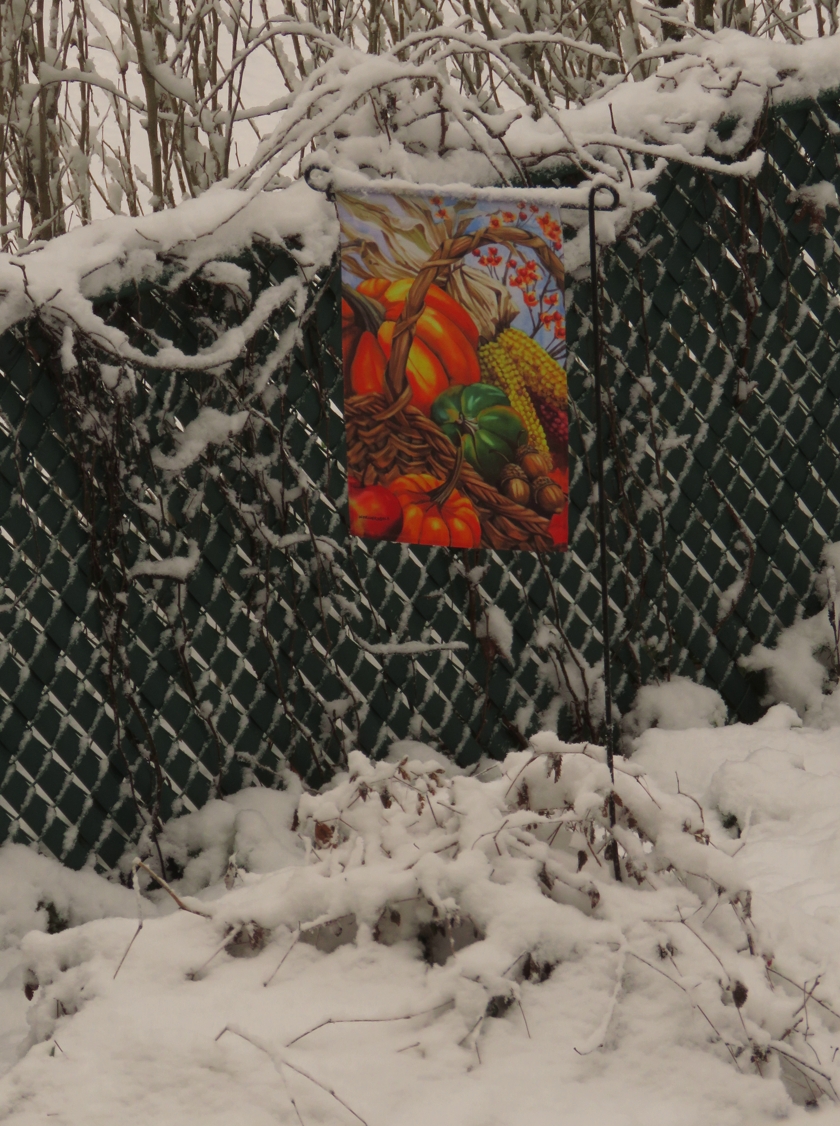
Between Seasons #1
Lost autumn colors,
but garden flag remembers.
Snow on power lines.

The rules and examples for this challenge allow marking the cut with punctuation and tweaking the cut when swapping the initial and final lines. Let’s do that.

Between Seasons #2
Snow on power lines.
But garden flag remembers
lost autumn colors.

Fall Frolic #1
Dancing on the breeze,
ignorant of gravity:
red leaf in blue sky.
My haiku has “#1” in its title to distinguish it from a similar haiku Fall Frolic #2. I prefer #1. Why bother with #2 at all? The answer to that question helps answer some others.
Fall Frolic #1 implicitly poses a riddle, then provides the answer. Who is the ignorant dancer? More subtly, why is (s)he said to be dancing “on” (not “in” or “with”) the breeze? The basic structure is the same as in Jane Reichold’s classic

Haiku © Jane Reichold superimposed on
Photo © Vladlena Azima | ShutterStock
Now consider swapping the initial and final lines of my riddle haiku:
Fall Frolic #2
Red leaf in blue sky,
ignorant of gravity:
dancing on the breeze.
While #2 describes the same scene #1, it lacks the suspense and resolution of the riddle structure. While both versions work, #1 works better. I still owe U an explanation: why bother with #2 at all?
The first draft for what eventually became #1 had initial and final lines that were very close to the corresponding lines in #2. The middle line had an entirely different way of hinting that the leaf’s freedom is a temporary illusion, between being stuck on the tree and stuck on the ground. The first draft’s hint would have been too obscure w/o either an appropriate picture or the explicit scene setting done by the initial line in #2.
Already unhappy with the first draft’s middle line, I swapped initial and final lines on a whim. The resulting riddle structure was motivation to get serious about clarifying the middle line.
Some haiku poets strive to have the initial and final lines be interchangeable. Unless I am responding to a challenge calling for haiku that work just as well when the initial and final lines are swapped, I usually do not consider swapping. Too gimmicky and arcane. But a swap while revising might help answer the eternal writers’ questions
Am I saying what I want to say?
Am I saying it clearly?

Gurērisu
Jump! Grab! Swing hips up!
Nimble ninja hogs the seeds.
Birds have a long wait.

Kiss Overlay © OlyaTropinina | 123RF Stock Photo
Mission Accomplished?
Ant with wings staggers,
then dies. Did I see him smirk?
Had he banged a queen?
Haiku poems often want (and sometimes need) to interact with images or prose, as in haiga or haibun. Here is a gathering of ten haiku that could stand alone if they had to. (Some would rather not.) They have been invited to come here and interact with just each other, while enjoying some good saké (or whatever).

Overlay © Incognito – Russian Federation | 123RF Stock Photo
A haiku inspired by an image may or may not speak to readers who have not seen the image. It’s hard for the writer to make this call objectively. That’s OK. As Stephen Jay Gould often told readers of his articles in Natural History, perfect objectivity is a myth anyway. (The path from my raw data to “facts” that matter to me depends on my cultural baggage and personal experience.) Rather than pretend that my judgement calls are objective, I try to compensate for my biases. In particular, some of my haiku were not invited to the party because they might be too dependent on their inspirations to stand alone. That’s OK too. Unlike me, they are not compulsively self-reliant.
Like some of the other guests, October was originally posted in a haiga or haibun context. That’s why the title it wears as a name tag is also a link. (When a pale yellow background indicates that several such guests arrived together from the same place, only one of them has a link.) Click on a link to see the guest(s) interact with an image or some prose that adds to the experience of the haiku.
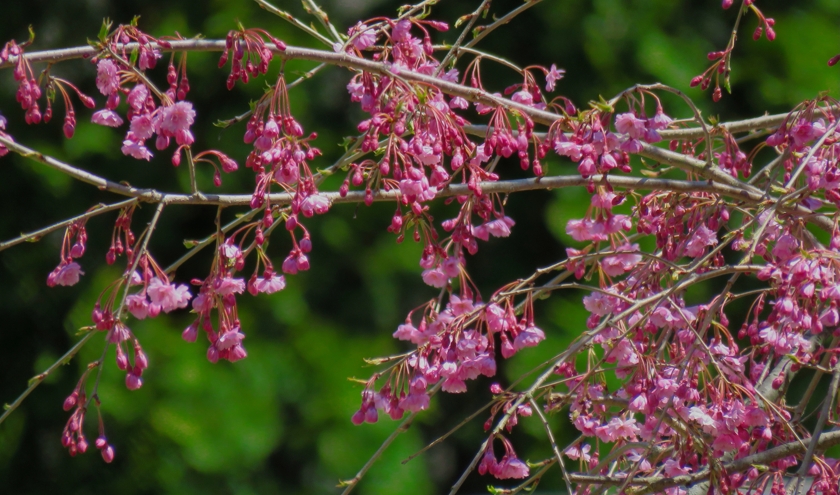
The cloud images in this post were in an earlier post (for a photography challenge) that emphasized synergy between pastel pink and green. Now I am responding to a haiku challenge with emphasis on synergy between poem and image in a modern haiga (with a photo as the image). Haiku #2 uses the modern kigo abalone.
To those who have not seen many nacreous clouds, the poems’ metaphors might seem far-fetched. Presenting the photos along with the poems they inspired may reassure readers willing to trust that the photographers refrained from deceptive editing. I took the calm photo; Sue Ranscht took the dramatic one.


© Sue Ranscht | Space, Time, and Raspberries
Cee’s Fun Foto Challenge: Texture

While haiku usually have 3 lines, some haiku do have just 2 lines. For example, Santoka Taneda (1882-1940) wrote a number of 2-line haiku.
After writing my first 2-line haiku, I reworked it to be a 3-line haiku that I preferred. I posted both and found that a few readers preferred the original 2-line version.
The haiku in this post is my second 2-line haiku, reworked from one with 3 lines. It is probably safe to say that it will stay at 2 lines, but don’t place a heavy bet.
Clouds ~ Pic and a Word Challenge #146

Storm Clouds #1
Looking up, I see
trees wary of churning clouds.
Wish I could look down.
~ ~ ~ ~

Storm Clouds #2
Looking down, I’d see
clouds caress dear Mother Earth.
Rain for thirsty trees.
Weather ~ Pic and a Word Challenge #122

In and On the Window
Sculpted by weather,
both old rock and young rain splats
glow in sun today.
Hmmm. The face is a mask that nobody is wearing. Who could be contemplating? And yet …
There is no nothingness.
Quantum physics finds
tumult in vacuum behind
contemplative mask.
If the allusion in my haiku responding to
« Contemplation ~ Pic and a Word Challenge #103 »is too cryptic, I recommend A Universe from Nothing by L.M. Krauss.
While the form is conventional, the content of the haiku may be the farthest outside the box that I have gone. As of now, anyway. So the haiku is also a response to
« Carpe Diem Writing and Enjoying Haiku #6 new ways »
![]() |
![]() |
Rules Went Away
!Doorknob meteor shower:
!mundane miracle.
Have U read Alice in Wonderland ? Expecting me to refrain from reworking an initial idea in my wordsmith’s forge is like expecting Alice to refrain from following a white rabbit who looks at a watch and frets about being late. Ain’t. Gonna. Happen.
Rules Came Back
!Meteor shower
!seen by day in a doorknob:
!mundane miracle.

Stained Glass in Spring
Leaves and seeds glow as
sunlight nourishes new life.
Cathedral window.
From
Five Haiku Poems: Balance | Poet Rummager:
Image by Jiang Daohua | Dreamstime.com

Nobody who is
always gloomy can stay sane.
Set your laughter free.
Allow happiness
to handspring into your grin –
spreading joy within.
Nobody who is
always happy can be sane.
Let your tears flow, too.
Allow the sadness
to somersault down your face.
Tumbling tears you’ll taste.
Staying on the beam
is a challenge, unless you’re
a world class gymnast.
Haiku poetry by Mellow Curmudgeon and Poet Rummager

From Suite 3 by JSB
Bubbles in Bach’s Air:
I cannot grab them, so I
sing with silent joy.