haiga, haiku, photography

Abandoned Temple

The haiku here is a 5-7-5 version of the last 3 lines from a poem by Patrick Jennings.

Big-4-Paestum_blem_rem_840x1322

Memories linger
tho nobody is still here
to remember them.

Visit Lingering to see the inspiration.

– Gray button (upper left corner) reveals widgets, –
– above post (on phone) or beside it (on desktop). –
photography, riff, seasons

Riff on a Quote from a Song

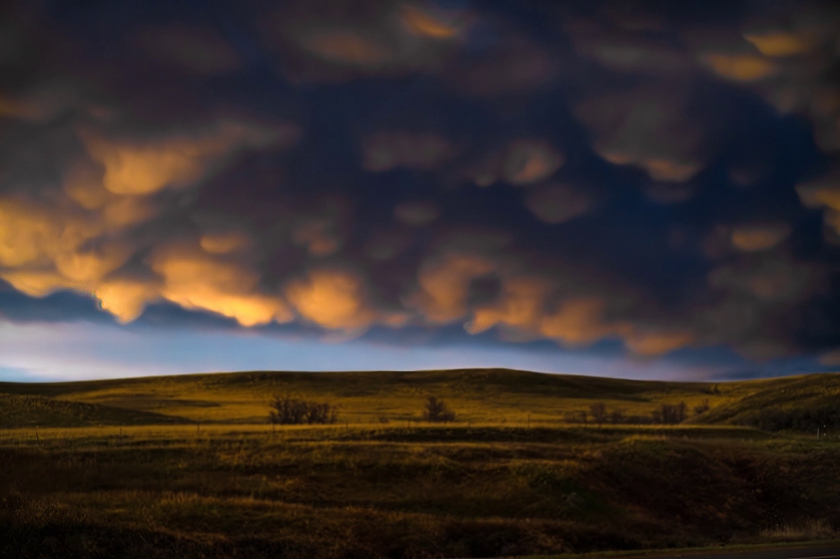
From a cloudless far horizon …

a-crack-in-the-sky_840x559

Photo © Patrick Jennings

to a gap in dense fall foliage …

20211008_134716_resized_crop_dram+10_840x1299

to an old window covering …

IMG_4943_crop-4

« There is a crack in everything. »
« That’s how the light gets in. »
~ Anthem by Leonard Cohen ~

I quoted from the song the way I and some others remember it.  The phrase “a crack” is repeated in some transcriptions of the first quoted line, but the line scans better w/o the repetition.

Cracks ~ Pic and a Word Challenge #341

– Gray button (upper left corner) reveals widgets, –
– above post (on phone) or beside it (on desktop). –
haiga, haiku, photography, seasons

Hope at Sunrise

Patrick Jennings’ challenge #259 salutes the sun in the great outdoors.  Sunlight is both a source of hope and something to hope for.  The same is true in more intimate settings, and the New Year got off to a good start at sunrise on 2021-01-01.
(BTW, the [Menu] button atop the vertical black bar reveals the widgets.)

Hope ~ Pic and a Word Challenge #259

IMG_4803_840x549

Morning Sun on Winter Wreath
|Bird, bow, and berries
|scatter rays of hope to me.
|Today may be good.

(reblog), photography

Ash Trees and Artichokes

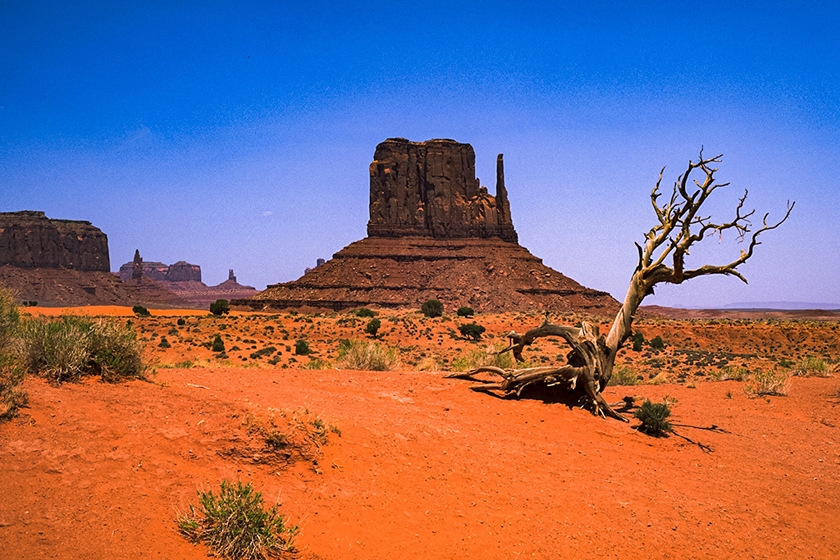
Apart from being plants, they have little in common.  But this particular ash tree and this particular collection of artichokes share a kind of solemn beauty in death.  My images respond to the image and words in Patrick Jennings’ challenge #258, which is reblogged (in effect) at the end of this post.
(BTW, the [Menu] button atop the vertical black bar reveals the widgets.)

ash-closeup_840x630

ash-hole_840x722

artichoke-bouquet_840x1119

© Patrick Jennings | Beauty ~ Pic and a Word Challenge #258

Dead tree & West Mitten Butte_840x560

There is beauty
In all things
Even death

To understand this
Is to master life

To master life
One must master death

haiga, haiku, photography

Seeking Solitude

«You may use my image in your post, or any image you have created.»  So say the rules of Patrick Jennings’ series of challenges.  For challenge #257, I did both at once.  (Details are at the end of this post.)  The image illustrates my haiku about solitude, which is sometimes an aspiration rather than a condition.

Solitude ~ Pic and a Word Challenge #257

solitude-overlay-60_ragged-edge_840x408

Not Alone
|Lonely in the crowd
|and weary of empty talk,
|I seek solitude.

Image Notes and Credits

I was intrigued by the landscape’s azure sky in
solitude-landscape_840x404

© Patrick Jennings

While the sky is fine just as it is, it is also a good place for an overlay with text or another image.

I had already used a downloaded image of a wearisome crowd to illustrate the first 2 lines of my haiku Not Alone:
cartoon people in the crowd

© Igor Zakowski | 123RF Stock Photo
(Image has been cropped.)

I decided to illustrate the whole haiku by overlaying the landscape’s sky with the crowd image, opaque at the top and then gradually fading out of sight toward the bottom.  By the time I noticed that my photo editor does not support opacity gradients in overlays, I had my heart set on the project.  Hmmm.  Overall opacity of 60% in the overlay looks good, apart from the sharp horizontal line at the bottom of the overlay.  Hmmm.  My editor does have enough functionality to make that boundary a little blurry and wobbly, with one eye of Ms Purple Hair left staring at the viewer.

– Gray button (upper left corner) reveals widgets, –
– above post (on phone) or beside it (on desktop). –
haiku, photography, seasons

Warmth and Light

Warmth and light are both in short supply outside at this time of year, but the plants in my yard know that relief is on the way.  Winter will end and they will rebound.  My haiku about their resilience can be a response to Patrick Jennings’ Pic and a Word Challenge #255.

Warmth ~ Pic and a Word Challenge #255

green-peek_934x657

daffodil-leaves_934x900

Spring
|After the winter,
|green plants spring back to savor
|warmth and longer days.

– Gray button (upper left corner) reveals widgets, –
– above post (on phone) or beside it (on desktop). –
(reblog), haiku, photography, politics, tanka

Twilight Tanka

In context, the phrase «world slipping into darkness» in a recent challenge refers to serene twilight in the natural world.  In the political world, the same phrase has an utterly different mood.  What to do?  Write a tanka and dig deeper for ways to fight the political world’s descent into darkness.
(BTW, the [Menu] button atop the vertical black bar reveals the widgets.)

The challenge is reblogged (in effect) below.  I was jolted by the clash between the serenity of the image and the political interpretation of a phrase in the poem.

ebbing-radiance-near-lions-bay-british-columbia_840x520

In the ebbing radiance
Of a world slipping into darkness
The light is most vivid
Capable of magiks
Unknown to daylight

© Patrick Jennings | Radiance ~ Pic and a Word Challenge #243

Radiance and Darkness
|In sure and certain hope
|that light returns tomorrow,
|sky’s radiance fades.
|
|But slipping into darkness
|is not serene for nations.


photography, politics

Freedom for Whom?

«Normally I let people interpret my poems as they will, but here I will be crystal clear on one point.»  So says Patrick Jennings in #236 of his Pic and a Word Challenge series, and I concur.  My poem in response to the challenge has a final couplet that could be misinterpreted, so I too will try to be crystal clear afterward.
(BTW, the [Menu] button atop the vertical black bar reveals the widgets.)

Freedom ~ Pic and a Word Challenge #236

Breonna Taylor and George Floyd did not enjoy freedoms that a white guy like me could easily take for granted.

Freedom?
|Freedom to be left alone,
|not be shot in my own home.
|Freedom from the nagging fear
|that a racist cop is near.
|Freedom to salute the flag,
|or to burn it like a rag?

flag_716x632

The Pledge of Allegiance ends with an aspiration, not a fact.  Maybe some flag burnings are meant to protest America’s failure to provide liberty and justice for all, but they don’t look like that.  They look like flag burnings in Tehran, like hatred of the republic for which it stands.

Tho ardent about civil liberties, I can accept prosecution of flag burners for violating local ordinances against open burning and the air pollution it causes.  Don’t give jerks who alienate potential allies an excuse to fancy themselves as martyrs for freedom of speech.

Close the Camps_2019-07-02_200x304

There are respectful ways to protest with the flag.  Fly it upside down.  Display artwork that incorporates it, such as the moving “Close the Camps” stickers (designed by artist Pablo Stanley) that were distributed by MoveOn.org in 2017.

Above all, remember that the worst defilers of the flag are the bigots and plutocrats who hide behind it, while denying others the freedoms it represents.

Remember in November.

language, philosophy, photography, science, seasons

Emergent Leaves and More

Much more.  Careful consideration of emergent things provides some hints about how to live fully and righteously on a little blue planet in a big oblivious universe.  Does that sound too grandiose?  Let’s start small, with some spring leaves and two ways to make adjectives.
(BTW, the [Menu] button atop the vertical black bar reveals the widgets.)

emergergent-sakura_crp-1_840x841

Turning Verbs into Adjectives

While we do it mostly by adding the suffix [-ing] (and maybe tweaking the spelling), we sometimes add [-ent] (or [-ant]) instead.  There is a subtle but important difference when we turn [emerge] into an adjective.  Leaves emerge and then go about the business of growing and photosynthesizing.  It would be a little better to say that my photo shows “emerging leaves” because there is no “and then” for emergent things.  They just are emergent.  What they emerge from is still there.

For example, look again at my photo, not as leaves but as an image.  It emerges from about 700,000 pixels encoded with about 480 KB of data in JPEG format.  That matters if I want to e-mail it to somebody who pays for data flow over a slow connection.  For many other purposes, to fret about the underlying pixels and bytes is a waste of effort.  The shapes and colors and composition are not in the pixels themselves.  They emerge from the way the pixels are arranged and interact with each other and the viewer.

My mild misuse of the [-ent] suffix for emerging leaves is a point of departure for considering bigger issues, not just a bow to the exact wording of Patrick Jennings’ challenge:

Emergent ~ Pic and a Word Challenge #232 – Pix to Words

Poetic Naturalism

Once we start looking for emergent things, we find that the world teems with them.  (Water, ice, and steam all emerge from crowds of the same kind of molecule.)  We find that fretting about “ultimate reality” may well be as pointless as trying to understand my photo by always diving down into those 480 KB and never looking at the emergent image.  While some contexts demand a deep dive, others demand a shallow one.

One of many places with examples and discussion of various emergent phenomena is Sean Carroll’s book The Big Picture, which somehow manages to be a good read (and a mostly easy one) despite dealing with deep stuff in science and philosophy while being fair to other viewpoints.

While nothing in science is nailed down as tightly as 3+2 = 5 in math, there is much evidence that we are in a tiny corner of a vast universe that goes its own way with no overall design or purpose or supernatural intervention.  Can we live fully and righteously in a cosmos that does not give a rat’s ass about beauty or goodness?  In much more detail than I can hope to put into a blog post, Carroll argues that we can.  Emergence is part of the story.

Tho a little queasy about Carroll’s use of the phrase [poetic naturalism] to name his upbeat attitude in the face of knowledge that would depress many people, I can’t think of a better name or a better attitude.

Don’t despair if love and justice seem as fanciful as unicorns when U consider only the underlying dance of atoms and molecules.  Love and justice may be real enough, but emergent.


flowers, humor, photography, seasons

Nothing Needed

Long ago, I bought some dwarf tulip bulbs and went thru the forcing rigamarole to get indoor blooming before planting the bulbs.  Nothing but leaves came up.  Feh.  Tossed the bulbs out back.  Guess what happened about a year later.

Nothing ~ Pic and a Word Challenge #231

Yes, the bulbs survived and put out leaves.  And flower stalks.  Which bloomed.

Year after year, the discarded tulips bloom in spring, while I do nothing for them.  Maybe they are old Yankees like me: compulsively self-reliant.

– Gray button (upper left corner) reveals widgets, –
– above post (on phone) or beside it (on desktop). –
haibun, haiku, history, humor, photography

Vertical Shoreline

How can a shoreline be vertical?  Well, steep cliffs can plunge nearly straight down into the sea.  There may be a cave entrance right at the actual shoreline.  Do we dare enter the cave?  Perhaps (to borrow a few words from Patrick Jennings’ Challenge #220) a beautiful light awaits us there.
(BTW, the [Menu] button atop the vertical black bar reveals the widgets.)

Shoreline ~ Pic and a Word Challenge #220

capri-cliffs_crop_840x1048_shrp+41

Is the sea at Capri’s shoreline still as clear now as it was when I was there in 1977?  I hope so.

capri-clear-water_crop_bri-8_bri-25_840x546

While we’re on the subject of clarity, let’s note that it is not clear whether the eponymous goats really did live on ancient Capri.  But it is clear that the island sited precursors of Mar-a-Lago for Imperial Rome’s fat tyrants.

From the outside, the Blue Grotto (Tiberius’ private pool) looks much like the (other?) grotto in my photo.  The view from inside is entirely different.

A cave entrance right at the shoreline can sometimes work magic.

capri-grotto-crop_HDR_bri-32

Blue Grotto (Capri) [edited image]

Capri Shoreline, Long Ago
|Goats traverse cliffs while
|pink whale swims in blue grotto.
|Naked emperor.

food, haiga, haiku, photography

I Dig This Challenge

Photographer-poet Patrick Jennings posts a weekly challenge to create something inspired by one of his photos and a single word.  Challenge #219 is posted with a photo and an appropriate haiku (using the challenge word “dig”).  Fortunately for me, it is OK to reuse Patrick’s splendid image in a haiga with my own haiku.
(BTW, the [Menu] button atop the vertical black bar reveals the widgets.)

clam-diggers-mendocino_840x435

© Patrick Jennings | Dig ~ Pic and a Word Challenge #219

Low Tide at Seaside Creek Beach
|To dig for clams is why
|we are here, beneath this sky.
|No clams?  No problem!

Two Cheers 😀 😀

The first is for anybody who noticed that changing the haiku’s initial line

To dig for clams … ⇒ Clam digging …

would make the haiku comply with the 5-7-5 rule.  The second is for anybody who noticed that the version of the initial line with 6 syllables has a better rhythm.  The actual editing change was from 5 syllables to 6.  Does that seem like an odd direction to move?

The outside story says that a haiku “is” a 3-line poem in blank verse with syllable counts 5, 7, and 5.  While this story is oversimplified, it is still a good place to start.  (Some haiku poets disagree.)  The inside story is more complex.  Various poets bend or break various rules at various times for various (and often good) reasons.  Tho messier, the inside story is ultimately the better one.  Just ask the clam digger who went home with an empty bucket but a full heart.