haiku, language, philosophy, photography

AKA Blue-Green (or Cyan or …)

This pretty color is also a visual metaphor: relationships mean more than intrinsic properties.  What to call it?  There’s a reason to prefer “blue-green” over other names, most of the time.
(BTW, the [Menu] button atop the vertical black bar reveals the widgets.)


Cee’s Fun Foto Challenge: Teal, Aqua, Seafoam or Turquoise

blue-green_840x666

What would I say is “the” color of the cloth in my image?  Even more than with other colors, how it looks depends on lighting and surroundings.  This pretty color is a visual metaphor: relationships mean more than intrinsic properties.

Colorful Plain English
|Inkjets squirt cyan;
|some poets sing of turquoise.
|I just see blue-green.

For most purposes, I prefer blue-green (and 2 variations on it) over the other names.  Anybody who knows what blue and green mean can guess what blue-green means.  Those who need more choices for naming colors like this can put blue-green between bluish green (AKA aqua) and greenish blue (AKA turquoise).  The 3 names I prefer are all clearer than names like aqua about where they lie on the range from just plain blue to just plain green.

Nerdy 😉 Note

Need still more choices?  Use Red|Green|Blue coordinates.  The 256x256x256 possible values for the RGB coordinates of a color can make more distinctions than U will ever need.

For example, the image below is a detail from the image above, with little yellow circles around 2 spots on the cloth, one relatively bright and another relatively dark.  Most spots on the cloth have [R|G|B] between the bright spot’s [45|223|226] and the dark spot’s [0|48|86].

blue-green_crop_upsize_mark_crop_840x131

If U like one of those colors enough to want it as a text or background color, U can use the corresponding hexadecimal code (#2DDFE2 or #003056) in an HTML style sheet.  Explicit hex codes avoid the bother of remembering the sometimes flaky conventional names for web colors.

Hex codes also provide flexibility.  Colors rarely look the way one expects when picking a color by pointing to it in another context, as I noticed when I used colors from an image to add a haiku to the image and then to write text referring to parts of the haiku.  Bumping coordinates up or down can adjust colors to look good in actual use.

haiga, haiku, photography

Looking Up or Down

How something looks may depend on how it is viewed.  Consider storm clouds.

Clouds ~ Pic and a Word Challenge #146

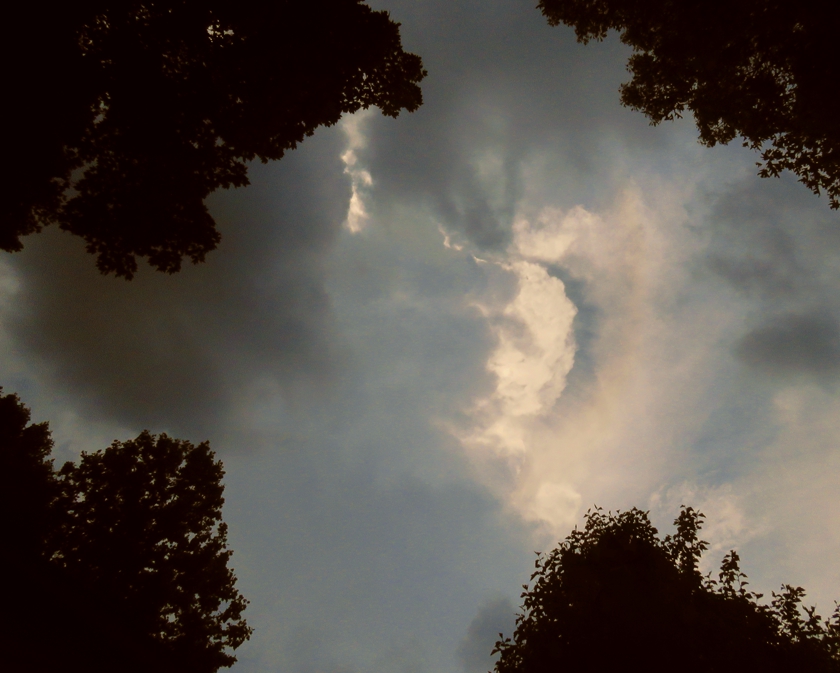
IMG_1967_Crop_Temp-30_Dra-6_840x673

Storm Clouds #1
|Looking up, I see
|trees wary of churning clouds.
|Wish I could look down.

~ ~ ~ ~

blue-marble_840

Storm Clouds #2
|Looking down, I’d see
|clouds caress dear Mother Earth.
|Rain for thirsty trees.

Image Sources

  • While doing a little yardwork before predicted rain, I glanced upward and noticed how trees framed a bright cloud in a darkening sky.  I ran for my camera and took a few photos.  For this post, I tweaked the image to mimic the ominous look I had often seen but not photographed.
  • The Blue Marble image was downloaded from NASA Visible Earth: The Blue Marble.  Making NASA’s image cost a lot more than making mine.  That’s OK.  It was money well spent.
(BTW, the [Menu] button atop the vertical black bar reveals the widgets.)
haiku, history, photography

Paestum Haiku

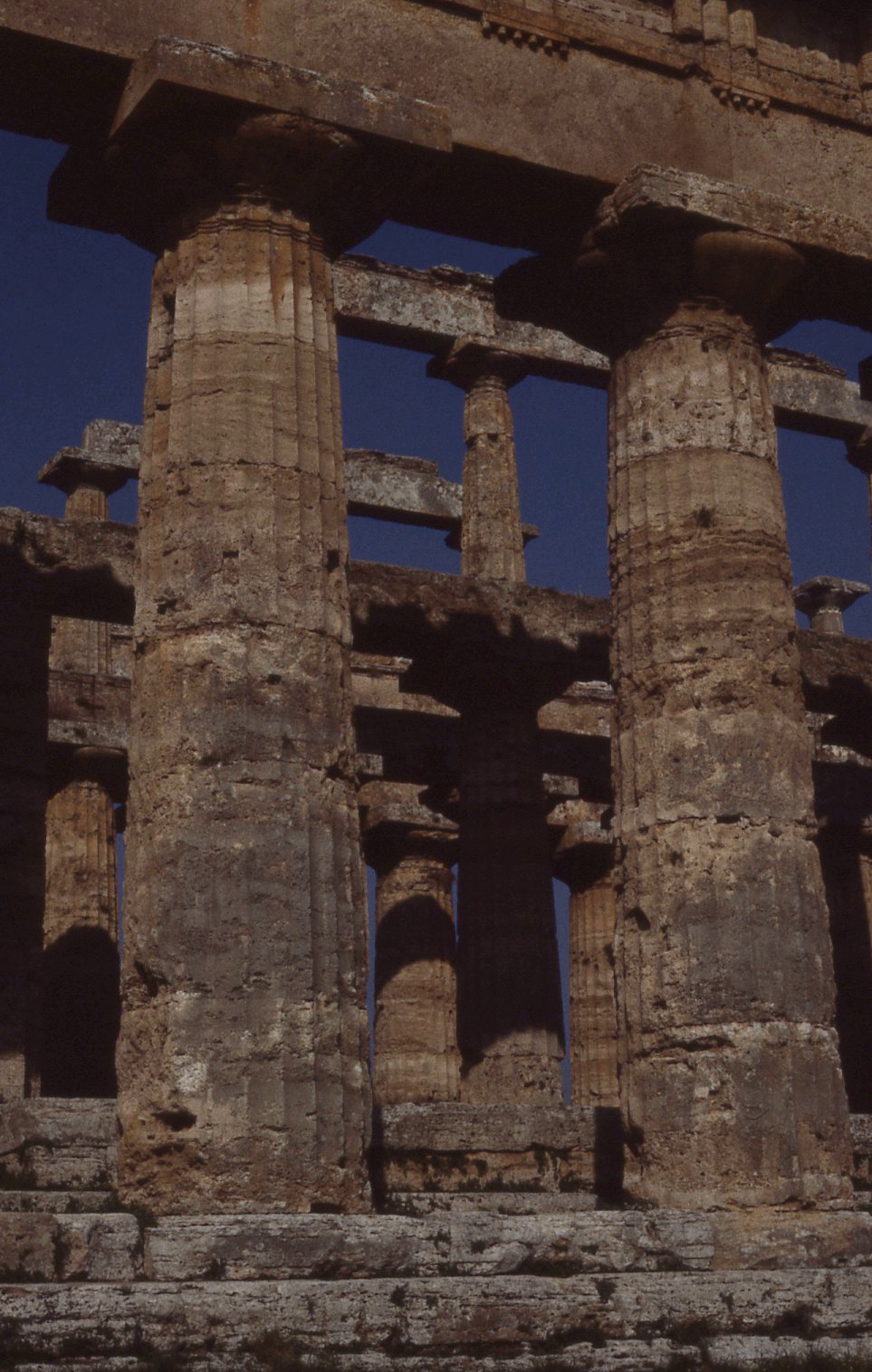
One ancient civilization that built big temples (from blocks of stone) built bigger things (from thoughts and deeds).  Much bigger.
(BTW, the [Menu] button atop the vertical black bar reveals the widgets.)

Big ~ Pic and a Word Challenge #143

Big-4-Paestum

Paestum #1
|Big limestone columns
|sang silent hymns to honor
|sleazy pagan gods.

Paestum #2
|Old Greek thoughts and deeds
|built bigger things than temples.
|Like democracy.

haiku, photography

Sparkle Of Joy, From Water

The [Menu] button (atop the vertical black bar) reveals widgets like the Search box.  Typing just the [Enter] key into the Search box is a way to browse WordPress blogs.

Carpe Diem’s Sparkle Of Joy …
introduction and first “task”

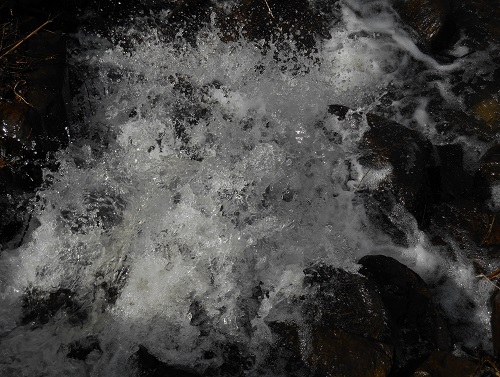
outflow-closeup

Sound of Sunlight
|Rushing waters bring
|joy to those who hear them sing
|and see them sparkle.

Happy Heraclitus
|Life flows and splashes.
|No things are permanent and
|all things are precious.

flowers, haiku, photography

Lavender and the Flag

Tho not a color many would choose for a flag, lavender goes well with red, white, and blue for Memorial Day.|
(BTW, the [Menu] button atop the vertical black bar reveals the widgets.)

Cee’s Fun Foto Challenge: Flags or Banners

Late May in my part of the USA is a time for blooming rhododendrons and several days of observing Memorial Day in various ways.  On 2018-05-30, I found good conditions and a good angle for a composition with my new flag and old rhododendron.  Tho not a color many would choose for a flag, lavender goes well with red, white, and blue for Memorial Day.

flag-rhodo-1_840x1062

Memorial Colors
|Lavender salutes
|red, white, and blue of our flag.
|Pride and gratitude.

haiku, humor, photography

Lines Plan Their Day

«Let’s twist and ripple across the computer screen
in an exuberant pseudorandom dance
that won’t repeat for centuries.»

twist-ripple-bird_840x788

«Maybe tomorrow.  Still sore from yesterday.
I pulled red line duty and
people stepped on me as they crossed.»

red-line_840x344

«Hmmm.  Let’s just mark a few straight edges
of flat surfaces in the real world
until U feel better.»
«I’m up for that if we keep the angles simple.»

corner-grn-pink-align_800x564

Images #1 and #2 in my response to

Lines | The Daily Post

were selected and cropped from bursts of photos while running the Mystify screen saver.  Image #3 is a photo of an architectural detail, edited to compensate for my inability to compose precisely w/o a viewfinder.  (Glad I eventually replaced the old camera by one with both a screen and a viewfinder.)  Here is a haiku about the kind of silliness exemplified by the dialog in my response:

What the World Needs
|More silliness from
|those who know they are silly;
|less from the others.

(BTW, the [Menu] button atop the vertical black bar reveals the widgets.)
haibun, haiku, photography

Rainbow Revisited

I found a splendid photo to illustrate a haiku about a rainbow in 2016.  Can I use the same photo for the same purpose w/o repeating myself?  Yes.  The photo is a gift that keeps on giving.
(BTW, the [Menu] button atop the vertical black bar reveals the widgets.)

Carpe Diem #1410 Rainbow (short-haibun)

In response to an earlier CDHK rainbow prompt, I wrote a haiku and later found a splendid photo to illustrate it (and inspire some haibun prose).  Can I use the same photo here w/o repeating myself?  Yes.  The photo is a gift that keeps on giving; it has inspired a new haiku.

Out of Reach
|Hard fingers rise up,
|trying to grasp soft colors
|as the rainbow fades.

australian-rainbow_350x466

The image used here has been resized from a photo by Randy Olson with a termite mound in the foreground.
Prints can be bought.

Including the post title and credits, the response above has 98 words.

haibun, haiku, humor

Sacrum Sutra

The [Menu] button (atop the vertical black bar) reveals widgets like the Search box.  Typing just the [Enter] key into the Search box is a way to browse WordPress blogs.

Can a haibun be a sutra?  Is the Kama Sutra anatomically correct?  We will see.

Carpe Diem #1369 Kamala

Climbing the Tree - crop

Climbing the Tree
(cropped)

The sculpted couple embrace, each standing on the left leg while hugging the other with the right leg.  She entrusts some of her weight to his strong stone hand and thigh; he entrusts some of his seed to her willing womb.

They have held their pose for something like a thousand years.  They ignore the admiring gaze of pilgrims who ponder the mysteries of life and love and whether flesh and sinew can hold that pose for anything like a thousand milliseconds.

Climbing the Tree
|She climbs his body
|as a tree that burns with lust
|(and lower-back pain).

ethics, haiku, humor, language, music, oversimplify

Be Precise, But Keep It Real

I am big on precise language.  Why am I so damn mellow about whether a poem is a haiku?  The answer hints at bigger things (like reconciling polished theory with rough-hewn reality), but there will also be a few jokes.
(BTW, the [Menu] button atop the vertical black bar reveals the widgets.)

Yes, there are short poems that are not haiku.  Limericks are not haiku.  Googling «one word poem» yielded more hits than I expected (and infinitely more than I would like).  U can read about one that made national news here.  One word poems are not haiku.  (As candidates for a one word poem about one word poetry, words like [prank] and [scam] come to mind.)  On the other hand, trying to say exactly what is a haiku is a lot harder than it seems to many people.  It is also a lot less important, and we should be thankful for small blessings.

A list of several common characteristics of haiku is a good starting point as a tentative definition.  Such a list can be good for introducing people to haiku.  Whether it should be carved in stone is another question.

Here is a plausible list of things one might say about a short poem in English, such that the poem “should” only be called a haiku if they are all true.

  1. It does not rhyme.
  2. It has 3 lines, with a total of 17 syllables distributed 5-7-5.
  3. It includes some seasonal reference.
  4. It includes a poignant relationship between nature and humanity.

I got this particular list from a thoughtful comment by Sue Ranscht on a post with a 3-5-3 haiku.  Amicably and implicitly, the comment posed the question that starts this post.  It deserves an amicable (but explicit) reply.

§1: How Do I List Thee?

Let me count the ways.  Hmmm.  Do I have enough fingers?

There is a downside to defining the word [haiku] in a way that excludes much of what the best haiku poets actually write and much of what the Haiku Society of America considers to be a haiku.  What are we to call that stuff?

Jane Reichhold (1937-2016) was among the many eminent haiku poets who do not adhere to our 4-item list.  She was also an advocate (so am I) of haiku with a characteristic that is not in that list: juxtaposing 2 contrasting images (rensô in Japanese).  Rather than import yet another Japanese word into English, she wrote about “fragment and phrase” as parts of a haiku, in an insightful essay that was nicely formatted in a CDHK episode.  The juxtaposition may seem incongruous at first, and much of the fun comes from realizing how it does make sense.  Sometimes one part clarifies the other.  Sometimes the fragment (the shorter part) is the punch line of a joke set up by the phrase, as in the essay’s clever classic

roasting_veg_chkn_800x575

Haiku © Jane Reichold superimposed on
Photo © Vladlena Azima | ShutterStock

Another criterion not in our 4-item list is interchangeability of lines 1 and 3.  While Jane did not advocate interchangeability (neither do I), it matters to some people.  Should we have a 6-item list?  There is no need to consider here the whole multitude of criteria that are sometimes important to some people.  There is no need to try wriggling out of the contradictions between some of these criteria.  This section’s takeaway is simply that there is no single authoritative list.  Do U find that conclusion stressful?  Maybe a musical interlude will help.

§2: Musical Interlude

Back in 1800, Viennese concert-goers knew what a symphony was, with or w/o knowing much music theory.  A symphony was an orchestral composition with 4 movements.  Movement #1 might have a short slow introduction; otherwise, movements #1 and #4 were both at a brisk pace.  Movement #2 was slower; movement #3 was a minuet at an intermediate pace.  Performing the whole thing took a while, but well under an hour.  And so on.  That was before Beethoven began shredding the dictionary.

Did anybody abuse the new freedom by writing schlock that was long and loud?  Of course.  But some composers crafted some beautiful and enduring symphonies with great care and skill.  Works like Dvořák’s From the New World are classics, tho in various ways they are not classical.

Saying that something is “a symphony” no longer says much about its length or layout.  With no claim that they are all great symphonies, here are a few examples of the diversity.

  • We have symphonies with less than 4 movements (Hovhaness; Schubert).  More movements were apparently intended for Schubert’s “unfinished” symphony, but it is deservedly popular as is.
  • We have a short strings-only symphony that does have 4 movements, but the 2 (not 1!) based on dance forms are not minuets (Britten).
  • We have humongous symphonies with vocal parts (Beethoven; Mahler).

And so on.

Maybe it would be nice if the word [symphony] had a more specific meaning, but we get by.  When Prokofiev revisited the old layout from before 1800, he did not claim to be writing the first “real” symphony in decades.  He just wrote his Classical Symphony. The title’s meaning is clear enough.

§3: Back to Haiku

I wish those who advocate one of the narrower concepts of haiku would imitate Prokofiev.  Speak of “classical” haiku or (better still) “traditional” haiku.  Say which of the various traditions U have in mind.  Want to make a discussion of a single tradition flow more smoothly by temporarily restricting the word [haiku] to that tradition?  That might work, but it is hard to avoid any hint of permanently excluding other traditions in other discussions.  Want to claim that working within your favored tradition tends to help people write good haiku?  OK.  I may well agree, unless U go on to claim that all haiku (or all good ones) are necessarily in that one tradition.  Ain’t so.

Most of my own haiku (and many that I admire by others) do comply with at least 2 items in our 4-item list.  Full compliance is common but far from universal.  Want to be careful and focused when writing haiku?  Pay serious attention to a list like this.  But don’t let the tail wag the dog.

§4: Leery of Labels

The 6-item list briefly contemplated at the end of §1 is much like the 7-item list of rules that was actually used in a challenging CDHK episode.  The main difference between the lists is in whether rhymes or words referencing the poet (like [I] or [dunno]) are forbidden.  Neither is common in haiku; both do occur.

I responded to the challenge with a cheekily titled but fully compliant haiku (This Haiku Is Kosher), followed by one that breaks a few of the rules (Not Quite Kosher).  Which rules?  In the unlikely event that anybody cared, I could say.  As it happens, my Not Quite Kosher is a wry lament (about crediting an image illustrating This Haiku Is Kosher).  The title’s double meaning would be lost if it somehow specified which rules in the 7-item list were being broken.

zen-frog

Not Quite Kosher
|Zen frog bronze sculpture
|(credit lost, like casting wax).
|Dunno who to thank.

Suppose we want to discuss partial compliance with a list of rules in some detail.  Would it be helpful to have a noun as a 1-word label to pin on my partially compliant haiku, so as to indicate exactly which rules it obeys?  Not really.  With 4 rules we would need 16 nouns.  That would be burdensome.  With 6 (or more) rules, we would need an absurd 64 (or more) nouns.  Better to just say what happens with each rule, if there is any need to say it.

Maybe a single noun for obeying all the rules would still be helpful?  No, it is better to just plop a convenient adjective (like [classical] or [compliant] or [kosher] or [traditional]) in front of good old [haiku].  Remembering which rules are relevant at the moment is enough of a cognitive load.

A cluttered vocabulary is not the only downside of a profusion of special nouns, one for full compliance with each of several lists of rules.  People tend to confuse pinning a fancy label on something with understanding it.  They also tend to assume that labels are mutually exclusive.  When the recipients of labels are other people, the results can be nasty.

§5: Takeaway

Tho willing to break the 5-7-5 rule, I obey it more than might be expected of somebody who knows about its origin in a translation error.  I am especially respectful of 5-7-5 when I write an aphoristic haiku (as a zingy summary of some nerdy philosophizing) rather than a moment-in-nature haiku.  With a linebreak after the comma, this post’s title could be a 2-line aphoristic haiku.  (Yes, there are 2-line haiku.)  Maybe a 5-7-5 aphoristic haiku will reinforce the point.

Precision < Accuracy
|Speaking precisely
|is great, if we speak about
|what is really there.

growing old, haiku, philosophy, photography

Wisdom in Wood

The haiku titles in my response to

Wisdom ~ Pic and a Word Challenge #124

stretch the word.  Another response stretches it similarly.

maple-far_800x1240

After the leaves have fallen in a wooded area, the good news is that we get a relatively unobstructed view of the tree trunks and branches.  The bad news is that it is not clear which of the trees are alive.

With one exception, all the trees and branches shown in this post are alive.

maple-hole-crop_800x595

Wisdom in Wood #1
|Singing silent songs
|of injury and healing,
|trees refuse to quit.

Wisdom in Wood #2
|Never die?
|No, the choice is to
|never quit.

ash-trunk_800x453

(BTW, the [Menu] button atop the vertical black bar reveals the widgets.)
flowers, haiku, photography

Elegy in 3-5-3

Basho (1644-1694) mourned the death of his friend and teacher Tando with a beautiful sad haiku.  A CDHK episode calls for variations on this theme.  Mine is an elegy for Tando.
(BTW, the [Menu] button atop the vertical black bar reveals the widgets.)

Basho (1644-1694) mourned the death of his friend and teacher Tando with a beautiful sad haiku:

© Matsuo Basho (Tr. Jane Reichhold)
|falling to the ground
|a flower closer to the root
|bidding farewell

Chèvrefeuille presents his own beautiful variation on this sad theme in the CDHK episode

Carpe Diem Weekend-meditation #14 Revise That Haiku

and challenges readers to “revise” Basho’s haiku in the same spirit:

© Chèvrefeuille
|tears flow
|falling to the ground
|autumn leaves

My response honors Tando’s influence on Basho (and hence on countless haiku poets) with imagery like Basho’s but a change in the metaphorical correspondence between the 2 people and some parts of flowering plants.  As he weeps, Basho also resolves to carry on.

Elegy for Tando
|Flowers fall,
|but seeds will ripen.
|Some will sprout.

Seedling_321x231_Basho_320x231_opq-62_321x215

enlightenment, haibun, haiku, history, photography, seasons

Oh Come, All Fibo-ku

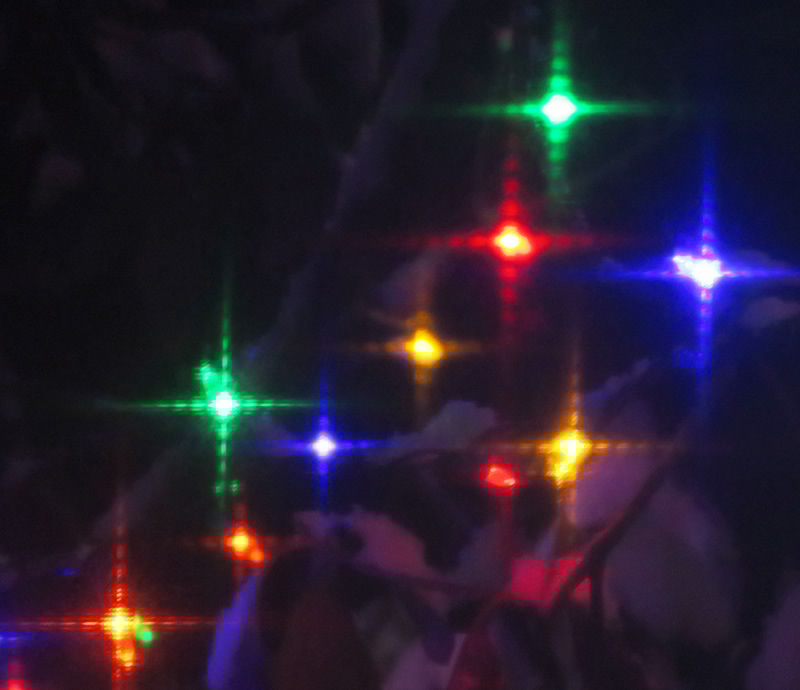
An old Xmas lighting tradition defies a darkness worse than long nights.  I honor it with my lights and with a fibo-ku (a haiku using the Fibonacci series rather than 5-7-5 for syllable counts).

My response to

Carpe Diem Weekend-Meditation #10
Fibo-ku winter time

could be called a “fibo-bun” because it is like a haibun but has syllable counts from the Fibonacci sequence in the haiku part.

Several cultures have responded to the long nights of winter with festivals or structures celebrating light at roughly the time of the solstice.  While not quite old enough to have personal memories of Stone Age passage tombs aligned with the sunrise (on a few of the several days that amounted to the solstice with Stone Age time-keeping), I do remember multicolored Hanukkah candles and the cheerful chiaroscuro of multicolored Xmas lights draped over trees and large shrubs.

multi-vert_800x1116
Nowadays I see mostly different kinds of Xmas lights.  Some people set out ugly jumbles of inflated Santas and other symbols of the gifting frenzy; others outline their houses with harshly uniform white lights.  But some still carry forward the old Xmas lighting tradition (with LED-s now).  And the glorious vocal music of Hanukkah and Xmas still transcends the literal meanings of the verses (2 of which inspired my titles here).

Darkness worse than long nights and garish decorations hangs heavy in today’s air.  Maybe this darkness will also recede.  My lights are up.

Yet in the Darkness Shineth
|Red,
|green,
|blue, and
|yellow lights:
|multicultural
|winter solstice celebration
|defies dark tribal hatred to sing of love and light.

multi-square_800x669

– Gray button (upper left corner) reveals widgets, –
– above post (on phone) or beside it (on desktop). –
haiku, history, humor, politics

What Luther Did Before Nailing

Did U ever wonder how an outraged monk could be like a frightened squid while being quite unlike the squid in a closely related way?  Neither did I.  The answer hit me before the question.
(BTW, the [Menu] button atop the vertical black bar reveals the widgets.)

The answer hit me while I pondered an intriguing juxtaposition in

Haiku Poems: Grip (For Samantha) | Poet Rummager

that inspired me to write a haiku:

Squids and Scribblers
|Squids squirt ink to flee.
|Writers also (sometimes), but
|often to confront.

• Image from © Brad Scot Lark | ShutterStock
• Image cropped from © Michele Paccione | ShutterStock

Long after Martin Luther’s time, fundamental institutions have yet again strayed from their missions and been corrupted.  Of course, people write (and mesh their words with images) very differently now.  Writers depend on the media (rather than a trip to the hardware store) to nail things to doors.  But if U listen carefully, U can still hear hammering.

2017-09-22

NON SEQUITUR © 2017 Wiley Ink, Inc..
Dist. By ANDREWS MCMEEL SYNDICATION.
Reprinted with permission. All rights reserved.